
Student-Centered School Leadership

Amy Parsons
Education Consultant
Topics
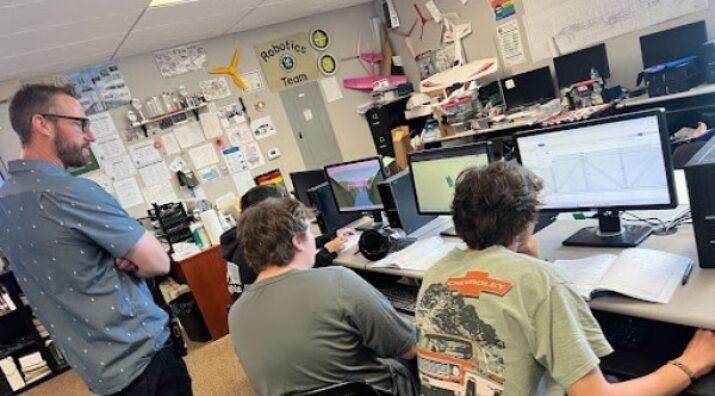
Next generation learning is all about everyone in the system—from students through teachers to policymakers—taking charge of their own learning, development, and work. That doesn’t happen by forcing change through mandates and compliance. It happens by creating the environment and the equity of opportunity for everyone in the system to do their best possible work.
Student-centered school leaders consistently listen to students and use student experiences and insights to drive instructional decisions and school design efforts.
How do you define a “student-centered” school leader?
I once heard a senior network leader describe her organization as student-centered because they had a mission statement based on student outcomes. But students as key stakeholders in school decision-making? That wasn’t on the radar.
It once wasn’t on my radar, either. But here’s what I’ve learned: Student-centered leadership isn’t just about outcomes—it’s about consistently listening to students and using their experiences to drive decisions.
Let me tell you about how I learned this. My Ed.D. research into innovative high school models led me to Jeremy Walden, the principal of Mission Vista High School in Oceanside, California. I chose MVHS as my Ed.D. case study site because it has gone through a multi-year redesign transforming the student learning experience and because it serves diverse populations of students, including many from low-income backgrounds.
As a researcher, I expected to be impressed by the school model. I did not anticipate being just as struck by the student-centered leadership model exhibited by Principal Walden and his leadership team.
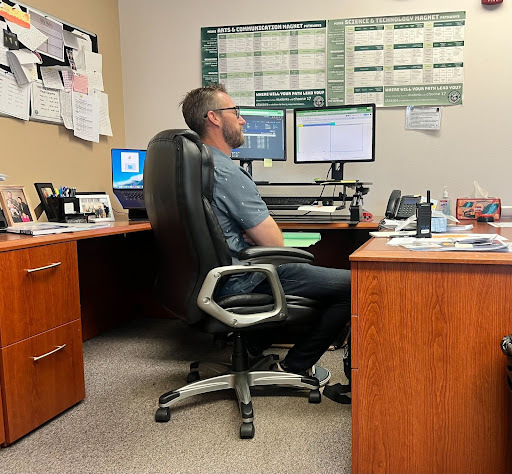
Jeremy Walden, Mission Vista HS Principal
Strong Student Outcomes at MVHS
MVHS is a magnet school with an innovative and effective school model–they offer personalized pathways with 60+ elective offerings and a 4x4 schedule that promotes deeper learning each semester. In fact, 17 of 32 courses over four years are student-selected. One student captured the spirit of this design by saying, “Teachers make learning feel relevant and not just like they’re following a curriculum.” Another added, “The reason kids try so hard here is because we like what we’re doing.”
MVHS has proof points in their student outcomes too. School performance data shows graduation and attainment measures above local/state baselines, cohort performance comparable to that of wealthier districts, and meaningful reductions in below passing rates in gatekeeper courses.
4 Key Takeaways about Student-Centered Leadership at MVHS
The school’s learning model is a result of dedication to continuous improvement. A few years ago, student surveys reported high engagement in learning but low belonging across the school. Walden led his staff to set the record straight with a simple, but powerful, philosophy: “Connecting with kids is a priority over content, always.” He knows rigor is important too, but emphasized that students won’t be engaged in learning without strong relationships first.
He also challenges traditionalism for its own sake: “Just because it’s traditional doesn’t mean it’s the right way to do it.” These perspectives shape his team’s leadership routines that push faculty to listen deeply to students and adjust practice accordingly. The monthly faculty meeting is all about instruction through the lens of the student experience. “What are the kids saying? What are you doing about it?”
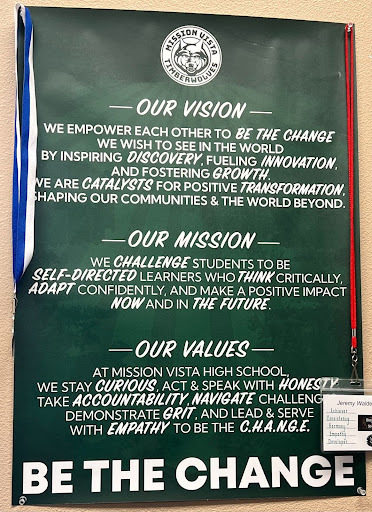
Mission Vista HS Vision, Mission, Values
Walden and his team conduct more than 25 student focus groups a year to keep a close pulse on what students are thinking and feeling about their daily learning experience at school. They also facilitate a Student Senate five or six times per year, representing a true cross-section of the student body. These efforts are about getting direct insight from students to improve practice as well as ensuring the school’s leaders know their students and consider their needs when shaping school-wide decisions.
They actually operationalize their commitment to equity. The school positions counselors as academic coaches who meet 1:1 with every student at risk for a D or F, combining academic and socio-emotional support. And all leadership team members, including Walden, have a personal caseload of students to check in with regularly. One teacher remarked, “How many school leaders do you know that look at the lowest 10 percent of students and really put a lot of energy into them?” The principal summed up the school’s ethos: "Here we believe that all kids can. All of our students have strengths and talents, and they don't want to be unsuccessful as learners. Let's get to know them, love them and push them, and be authentic champions by their side."
Here’s what MVHS gets right: school design, equity systems, and leadership priorities intersect. Purpose-anchored learning, responsive adult practices, and systematic support together create conditions where more students experience relevance, connection, and success.
As an educator, I was deeply inspired by what I learned from MVHS. But as a doctoral student, my challenge was to put what I learned into practice.
Here’s what happened when I led eight school and district leaders in a Professional Learning Cohort (PLC) to try some student-centered leadership practices.
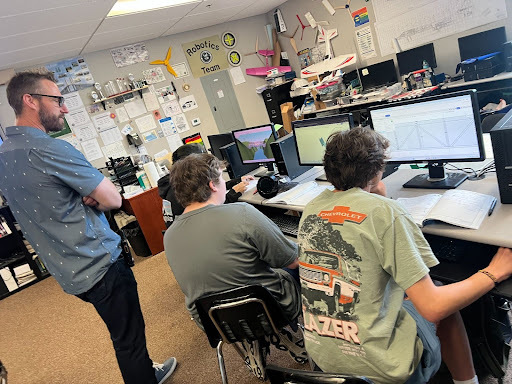
A Professional Learning Cohort to Explore Student-Centered Leadership
Eight leaders signed on to a semester-long PLC in the spring of 2025. Representing five charter high schools, across multiple regions, all leaders were curious and open to increasing their student-centered leadership. The PLC met monthly for 90 minutes between February and June, with a focus on collecting data from students about their learning experiences and using the data to make decisions or propose shifts to school-wide priorities.
In the first session, the leaders reflected on the MVHS case study and received tools to support their next steps with student-centered leadership. These included a student-centered lesson observation guide, a rubric for evaluating teacher-student relationships, a protocol for leading student focus groups, and a template for a school-wide survey. In between PLC meetings, leaders chose two data-collection methods to implement to ensure triangulation. They then brought key findings back to the PLC for brainstorming and action planning.
The fastest way to improve your school is simpler than you think: ask your students.
What Did Leaders Discover by Centering Student Voices in Data Collection?
Students at all five school sites reported dissatisfaction with their daily learning experiences, although there was a range of variance across schools. In some cases, students reported that they knew their lessons were rigorous, but they found them mostly uninteresting. At one site, students loved the project-based internships they got to opt into during spring break, and wanted more of that during “regular” school. At another site, 70 percent of students interviewed said they had no memorable learning experiences they could remember at school.
One leader said, “I don’t want to say it was a surprise, but maybe it was. Maybe I’m always surprised when teenagers say they want more work or more engagement, but this was a good reminder. Students want to be challenged. They want to be pushed.”
At one school site, the leader gained additional “eye-opening” insights. At the start of the PLC, she responded with “agree” on the 5-point Likert scale question, “Student voice is an important component in the design of the learning experience at my school, “ then realized she had been “under an illusion.” After leading focus groups and administering a grade-wide survey, she reflected, “We actually don’t do this. I’ve been hearing what the adults are saying. But I wasn’t actually hearing it from the kids.”
What Changed for Leaders
Leaders reflected that they had experienced significant personal growth as a result of participating in the PLC. One leader described the shift as profound: “I previously made a lot of assumptions about what kids thought, and some of them were correct. But the reasons weren’t always correct, like the root causes….”
“I don’t know why I was making assumptions instead of just asking them,” she said.
As a result, she said her instructional leadership routines are changed, and whenever she’s observing a class, she asks the kids what they’re learning. “I just didn’t think about it before.”
Another leader reflected that she and the other leaders at her school tend to be “test results-driven.” Now, she’s thinking differently about curriculum and professional learning, considering how the teachers can be more grounded in student voice. Another leader said, “We're always thinking about the students, but now I think we can do a better job of getting their input.” The focus groups she led made a powerful impact on her. Her team had led focus groups in the past to get responses on big changes, but not for “ongoing, informal feedback.”
One of the leaders reflected on the changes to his own perspective after the PLC: “That simple shift of interviewing students kind of rewired me, I think…now, every time I’m thinking about something at school, I’m thinking about the student input piece as well.” He said he had always talked with the kids, but now, he’s more focused on conversations about their learning experiences. “Now every time I have a conversation like that, I’m like, why have I not been doing this?”
Plans for Change
In addition to the changes in leader mindsets, all leaders made plans for strategic change in response to the feedback from students.
At one site, leaders took quick action during the spring to coach teachers on meaningfully engaging students in their lessons. They found that framing lessons around the purpose made a noticeable difference in student engagement. Another site focused on modeling for teachers what authentic hands-on learning experiences can look like. Participants also made plans for strategic priorities in the next school year, including a year-long professional learning sequence centering student voice, goal-setting to improve belonging and relationships, and commitments to continue systemic student data collection and coach secondary leaders to do so as well.
Obstacles to Change
School Culture Barriers
Some PLC participants faced significant barriers in their efforts to lead change inspired by students. Two of the participating schools expressed a feeling of being “stuck” based on the overwhelming state of their schools. They cited staff turnover, various vacancies, low teacher expectations, and an overall atmosphere of compliance. Another leader reflected on a pattern at her school of doing too much. As a principal, she feels limited in her effectiveness when she’s balancing too many initiatives. “We’re trying everything and basically seeing what sticks, but also, how to balance that as a leader when you know the needs and also don’t want to burn out your staff in the process?” Participants held on to hope that the PLC could support them in addressing some of the root causes of these conditions. It took courage and vulnerability to discuss these challenges openly, and those discussions helped to foster authentic collaboration across sites.
Leadership Disconnects
A roadblock that participating leaders didn’t anticipate was the disconnect between how they wanted to address student feedback and what their senior leaders mandated instead. This challenge arose at two sites. One leader, who found low student engagement and low belonging, expressed disappointment that he couldn’t get his head of school on board with changes he wanted to make to teacher coaching priorities. He said, diplomatically, “I don’t think the information resonated with the leader the way I would like it to.” He was told to focus solely on curriculum implementation.
Another leader also faced what she described as organizational resistance to change. She brought a few proposals to the leaders, including big changes, like student choice in course enrollment, and small ones, like informal lunch clubs. She said, “It was all a no. We can’t do this. We have to bring this to the network. No.” These disconnects with senior leaders were difficult for participants to navigate. One wondered, “If I keep pushing for what the kids want, what will happen?”
3 Key Takeaways from the PLC
The PLC was transformative. The group started as leaders driven primarily by assumptions of what students think and an initial curiosity about what they might learn from student feedback. By the end of the PLC, leaders were committed to centering the student experience and continuously listening to students themselves. One leader reflected, “We need to prioritize what students are telling us and use that to guide our instructional decisions; it’s the student experience that should shape and drive our improvement efforts.” Leader mindsets do not singularly change schools, but shifting mindsets is an important precursor to change.
What made the difference wasn’t theory—it was simple tools they could actually use. The MVHS case study made a noticeable impression on participating leaders. Principal Walden’s commitment to the student experience inspired participants to examine their practice and invest in the goals of the PLC. Secondly, they said the rubrics, protocols, and templates I provided through the PLC were accessible and easy to use. One leader described them as “low lift” and “extremely doable.” These tools deepened the learning experience of the PLC and supported leaders in implementing next steps.
Student voice illuminates important truths. Students at all five high schools represented in this study are disappointed in the learning opportunities available at their schools and are asking for more. It is clear that more engaging, hands-on, purposeful, real-world-connected, and meaningful learning experiences are just the beginning of what our students deserve.
Start Here, Tomorrow
I’d like to close by asking you this question again: How do you define a “student-centered” school leader?
If you lead a high school, you don’t need a comprehensive redesign plan to get started. Start by asking your students about their daily learning experience, and be prepared to act on what you hear.
- Run 2–3 small student focus groups (~6 students each) for 20 minutes each and ask:
What makes a class engaging or not?
What was the most memorable lesson experience you’ve had this year?
To what extent do you feel you belong at this school?
How many adults here would you say know you very well?
Add one question to every classroom visit: “What are you learning today, and why does it matter?”
Identify one pattern in student feedback—and act on it within 2 weeks.
The fastest way to improve your school is simpler than you think: ask your students.
All photos courtesy of the author.
Amy Parsons
Education Consultant
Amy Parsons is an education consultant with over two decades of experience in teaching, school and district leadership, and consulting across the United States. She holds a doctorate in Education Leadership from Northeastern University, where her research focused on student-centered, equity-driven high school design. Follow Amy on LinkedIn.