
The Power of Co-Design: Why Youth Voice Is the Pulse of Innovation
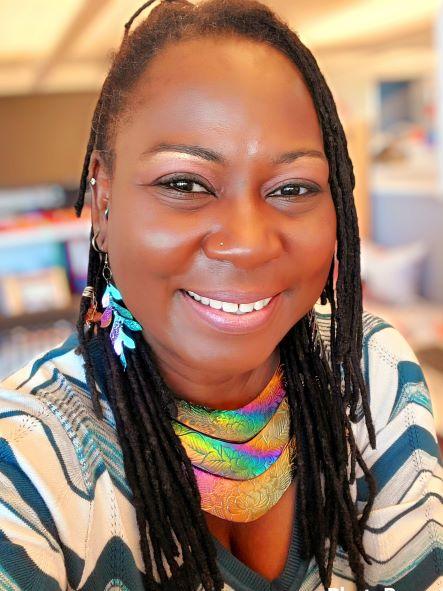
Nika Hollingsworth (she/her/hers)
Manager of Community and Faith Based Initiatives
Boston Public Schools
in Boston, Massachusetts
Topics
Next generation learning is all about everyone in the system—from students through teachers to policymakers—taking charge of their own learning, development, and work. That doesn’t happen by forcing change through mandates and compliance. It happens by creating the environment and the equity of opportunity for everyone in the system to do their best possible work.
School-community partnerships that have the greatest impact are those that invite students to co-design the programming and lead change efforts.
Think of relationships not just as a connection, but as architecture. For decades, the "experts" in traditional education have sat behind closed doors with expensive tools, drafting rigid blueprints for a house we thought our students needed. We’d finish the build, hand over the keys, and say, "Here’s your new home. Move in.” But when we looked out the window, the students weren't moving in. They were still standing on the lawn, staring at a structure that had no windows where they needed light and doors that didn't fit their frames. We have now come to realize that we’ve spent all our energy drawing the plans and raising the walls, but we had never actually invited the residents to the construction site.
True innovation doesn't start at the drafting table—it starts with the people who have to live inside the design. Additionally, true innovation courses forward when community partners move beyond being just "vendors" to becoming co-creators alongside our students.
In my current role and as a former student, I’ve learned that a partnership isn't just about providing a service—it’s about sharing the drawing board. I see a recurring challenge: much of the innovation pushed into our schools is built on academic theories written by people who aren't actually members of the communities they serve. There is a profound difference between academic theory and practitioner theory.
When we talk about innovation in education, we aren't just talking about new gadgets or technology; we are talking about a fundamental shift in how we build the learning experience by centering student agency.
Beyond the Classroom: Community Partnerships as Catalysts
When we work to bridge the gap between educational needs and community resources, we can better focus on ensuring quality programming for marginalized and historically excluded communities by recruiting and engaging with both community and faith-based partners. We know that our students' lives don't start and end at the school door. Community partners offer a holistic layer of support—from food security to mentorship—that allows students to show up as their full selves.
The most impactful partnerships are those that invite students to co-design the programming. Whether it’s a leadership program for young Latina women or a STEM initiative, these innovations are more effective because they are rooted in the lived experiences of the youth they serve.
Why Co-Design Matters
Involving youth in the design process of education is a critical strategy for re-engagement. In schools across the U.S., we are currently addressing trends of growing disengagement among youth at later academic stages, which contributes to chronic absenteeism. Co-design addresses this head-on by:
Fostering Agency: When students help build a program, they own the change. They transition from passive recipients to active stakeholders.
Ensuring Cultural Relevance: Youth-led innovation ensures that curriculum and services honor our students' identities, helping them see themselves as agents of positive change.
Developing Real-World Skills: The process of co-designing teaches self-accountability, resilience, problem-solving, and self-advocacy—skills vital for success in any life path.
Putting Voice into Practice: Partnerships in Action
At Boston Public Schools (BPS), we don't just talk about co-design; we see it in our most successful collaborations:
Chica Project: This organization focuses on leadership development for young Latina women. The work to ensure their programming—which is led by youth of color—evolves based on direct student feedback.
The Opportunity Youth Collaborative: This partnership supports students who have become disconnected from school. It emphasizes youth voice projects, such as a mental health advisory council where students design peer-led conferences and advocate for structural well-being changes.
Center for Teen Empowerment: Their Youth Organizing Initiative focuses on trauma-informed development, where students actively lead community-based change efforts.
Innovation Is a Shared Responsibility
Innovation requires a "dynamic duo" approach: balancing data-driven systems with a community-driven focus on collaborative culture. We encourage BPS partners to perform consistent "check-ins" with students, creating spaces where youth can share ideas to improve programming. This creates a feedback loop where the innovation is constantly evolving to meet the real-time needs of youth.
The Architecture of the Future
Educators often spend years in our work trying to "fix" a system for students, only to realize we’ve been building a house they never wanted to live in. If we aren’t inviting youth to hold the hammer, we aren't innovating—we’re just redecorating the same old room. The moment we realize that our students aren't just the leaders of tomorrow; they are the experts of today… when we stop designing for them and start designing with them… we don't just bridge the gap—we build a bridge to a world where they’ve already arrived.
If we aren't listening to the youth, we aren't leading the future. We’re just standing in the way of it.
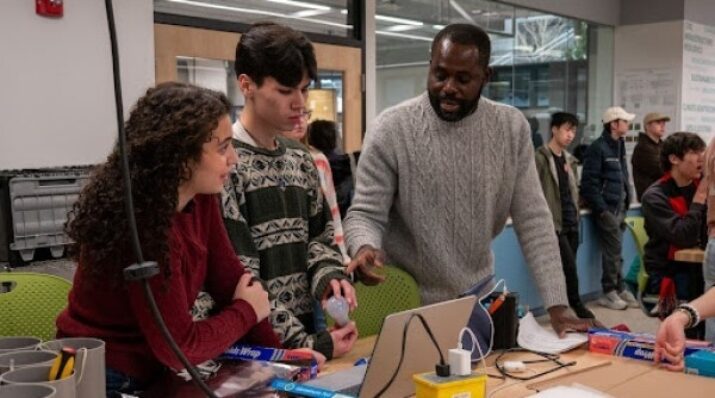
Credit, photo at top: Northeastern University/Center for STEM
Nika Hollingsworth (she/her/hers)
Manager of Community and Faith Based Initiatives, Boston Public Schools
Nika Hollingsworth is a passionate, community driven professional who specializes in creating innovative, systematic approaches to partner outreach and relationship management. She is focused on aligning district goals and partner relationships by way of collaboration and execution of a holistic framework toward desired outcomes.