From the Factory Line to the Classroom: How I Built the Culture I Thought Would Take Years

Rebecca Doyle (she/her)
Life Science Teacher
Crestwood Middle School, Chesapeake Public Schools
in Virginia Beach, Virginia
Topics
When educators design and create new schools, and live next gen learning themselves, they take the lead in growing next gen learning across the nation. Other educators don’t simply follow and adopt; next gen learning depends on personal and community agency—the will to own the change, fueled by the desire to learn from and with others. Networks and policy play important roles in enabling grassroots approaches to change.
The routines, structures, and clarity of an innovative learning model can help teachers build positive, supportive systems and culture in their classroom.
I didn’t start my career in education. I started on a factory line, where everything relied on systems. When the flow was right, the people inside it could breathe. When it wasn’t, everything strained. I didn’t realize how much that early experience would shape the way I felt stepping into a classroom years later.
As a new teacher, everyone talked about the importance of “building classroom culture.” And I understood it—I had seen the way veteran teachers created warm ecosystems students walked into like second homes. But no one tells you how long it takes to build that kind of environment, or how overwhelming it feels to try to create it from scratch while you’re still learning where the copier lives.
Culture takes time. Time I didn’t have.
My students needed stability immediately.
The Modern Classrooms Project (MCP) arrived for me at exactly the right moment, though I didn’t recognize it as a “culture framework” at first. I thought it was just a teaching model. I was expecting self-pacing and better differentiation—all the things the website tells you. What I wasn’t expecting was that, along with an effective learning model, I also gained the structure, routines, and predictability that usually come after years of trial and error.
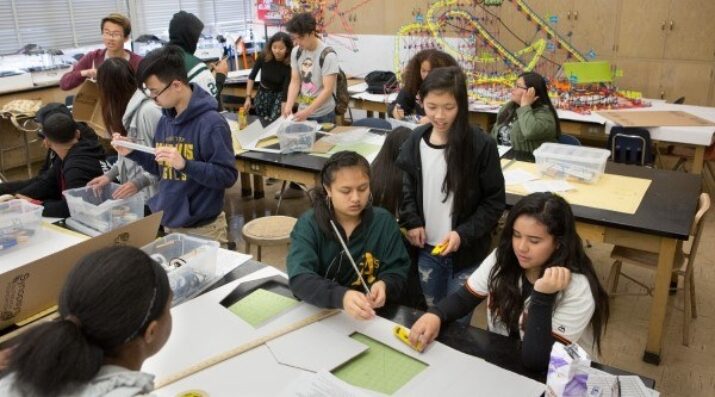
I could feel the shift almost immediately. My classroom settled. Students weren’t waiting on me for every step; they understood the flow of the day. They moved with more confidence. The room became calmer—not because I had suddenly become charismatic or masterful, but because the system itself carried a lot of the weight I had been trying to hold alone.
That’s when I noticed the other changes.
I stopped “managing” constantly.
I had time to talk with students as humans.
I could actually teach—not perform.
And students rose to meet the structure. They revised more. They asked questions with real curiosity instead of fear. They took ownership in a way that honestly surprised me. I realized that all the culture I thought I needed ten years to build wasn’t actually about personality at all. It was about clarity. Safety. Predictability.
It was about a system that didn’t depend on me being perfect.
The longer I taught this way, the more obvious it became: the culture we often say “develops over years” can actually develop quickly when the foundation is already there. The mastery-based, self-paced, blended learning model I found through MCP worked for me because it mirrored how humans learn—through autonomy, routine, and a shared sense of purpose. But the deeper impact wasn’t the model itself; it was what the model provided.
And I think that’s something new teachers deserve. Not survival mode. Not chaos disguised as flexibility. Not the guilt that comes from wondering, “Why isn’t my room running the way theirs does?” A system of effective teaching and learning shouldn’t take a decade of emotional labor to build. It should be offered early, so teachers can spend their energy on relationships, not rescue missions.
For anyone in their first few years and drowning in invisible expectations, the smallest structural changes can completely change the feel of a classroom. Even something as simple as a pacing routine or a clearly defined mastery check can anchor an entire day. When students know what to expect, they can finally focus on learning—and you can finally breathe.
In manufacturing, I learned that strong systems support strong people.
In teaching, I learned the same is true.
I found a system that worked for me and my students, but the deeper lesson wasn’t about the model itself. It was about building structure, routines, and shared expectations that allow a community to form. Wherever that structure comes from, the goal is the same: a classroom where students can breathe, belong, and learn.
My students deserve nothing less.
Photo by Allison Shelley/The Verbatim Agency for EDUimages. CC BY-NC 4.0
Rebecca Doyle (she/her)
Life Science Teacher, Crestwood Middle School, Chesapeake Public Schools
Rebecca Doyle is a middle school science educator in Chesapeake, Virginia, where she combines mastery-based learning, AVID/WICOR strategies, and Modern Classrooms Project principles to create a student-centered, relationship-driven classroom. Drawing on her early career in lean-flow greenhouse manufacturing, she writes about the intersections of cognitive load, workflow design, and equitable instruction. She is especially passionate about helping students build confidence, independence, and a sense of belonging through clear structures and empathetic teaching.