Preparing the Next Generation of Educators

Katie Colina, Dominique Smith, and Sarika Simpson
Topics

Educators are the lead learners in schools. If they are to enable powerful, authentic, deep learning among their students, they need to live that kind of learning and professional culture themselves. When everyone is part of that experiential through-line, that’s when next generation learning thrives.
When teacher preparation programs help educators develop these four skills to sustain their impact, they demonstrate that great teaching is about more than lesson plans and test scores.
If we could redesign every teacher preparation program, we’d start with the skills that truly sustain an educator’s impact because great teaching is about far more than lesson plans and test scores. These four skills are essential for the next generation of educators.
1. Growing Policy Awareness
First, we’d ensure future educators deeply understand how policy impacts students. Education policy isn’t just paperwork or legislation; it’s the framework that shapes every classroom. From funding formulas to attendance rules, from curriculum mandates to discipline policies, the effects are felt most acutely by students. Teachers who understand this landscape can navigate it thoughtfully, speak up when something isn’t working, and prevent unintended harm. We want future educators to not only know what the rules are, but to ask why they exist and how they can be improved. This is where advocacy begins, by using their voice to push for changes that benefit all students.
2. Building Authentic, Respectful Relationships
Second, we’d make sure they know how to build authentic, respectful relationships. Connection is the foundation of learning. Students learn best when they feel seen, valued, and safe, when their identities and experiences are recognized as assets, not obstacles. Relationship-building means listening with empathy, showing up with consistency, and holding high expectations alongside high care. These skills are not “soft;” they are the bedrock of a thriving learning environment.
3. Cultivating a Community of Care
Third, we’d equip educators with the tools to care for themselves. Teaching is demanding work, both emotionally and physically. Without strategies for personal sustainability, even the most passionate educators can burn out quickly. That’s why self-care in teacher preparation should go far beyond surface-level wellness tips. We’re talking about developing emotional intelligence, cultivating self-awareness, and learning to set boundaries without guilt. It’s knowing how to notice stress before it becomes a crisis, how to seek support, and how to rest without apology. When educators protect their own well-being, they’re better able to show up as their best selves for their students.
4. Learning How to Advocate
Finally, we’d ensure that advocacy isn’t treated as an optional skill. Teachers are uniquely positioned to notice when systems are failing their students and to speak up about it. Advocacy can take many forms: joining a committee to revise discipline policies, partnering with families to address inequities, testifying at a school board meeting, or mentoring new teachers to pass on the importance of justice-driven practice. When educators are prepared to advocate, they are not just teaching, they’re shaping the future of education itself.
Over the years, we’ve seen that without these four capacities—growing policy awareness; building authentic, respectful relationships; cultivating a community of care; and learning how to advocate—even the strongest instructional practices can fall short. If we truly want to prepare teachers who thrive and help their students thrive, these should be non-negotiables in every teacher preparation program.
Listen to Our EDU Café Podcast Episode!
NGLC is grateful for our collaboration and partnership with EDU Café Podcast that brings fresh voices and insights to the blog. Listen to the full episode of the podcast that inspired this article:
More from the Authors
- Bridging People and Policy in K-12 Education - Policies should be designed to remove barriers, not create them, so that every student has a genuine chance to succeed.
- Building Humanity into Student Success Policies and Systems - Success after high school isn’t only about college readiness, it must include viable employment pathways, financial stability, and sustained access to the supports students need to not just live but thrive.
- Policy Gives Us Structure. Compassion Gives Us Purpose. - When well-being comes first, attendance improves, engagement grows, and the outcomes that policy aims to achieve naturally follow.
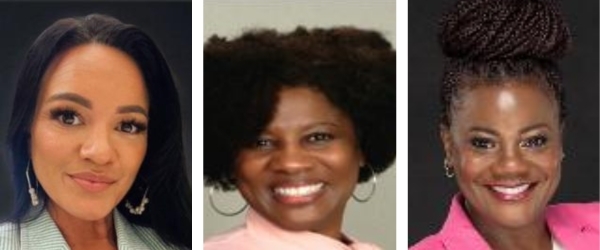
The authors: Dr. Katie Colina, Dr. Dominique Smith, and Sarika Simpson
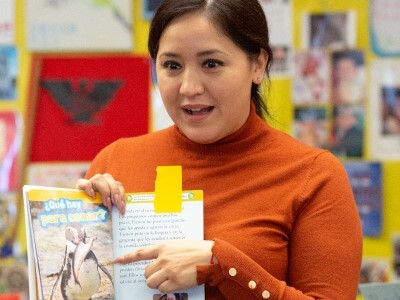
Photo at top by Allison Shelley for EDUimages, CC BY-NC 4.0.
Katie Colina, Dominique Smith, and Sarika Simpson
Katie Colina (She/Hers), Expert in Government Relations and Educational Policy, Independent Consultant in Dallas, Texas
Dr. Katie Colina is a nationally recognized leader in education policy, government relations, and K–12 system transformation. With over 25 years of experience from the classroom to the executive level, she helps education leaders translate policy into sustainable, student-centered solutions. Known for her bipartisan approach and strategic insight, Dr. Colina has advised school systems nationwide and presented alongside national figures including former U.S. Secretary of Education Arne Duncan and Governor Jeb Bush. Her work continues to inform policy decisions, strengthen school systems, and ensure every learner has access to opportunity. Follow Dr. Katie Colina on LinkedIn.
Dominique Smith (She/Hers), Expert Leadership Coach and Advocate for Underserved Youth, Independent Consultant in Cordova, Tennessee
Dr. Dominique Smith is a seasoned educational leader with over 25 years of experience serving in both traditional and non-traditional school settings, with a deep commitment to supporting underserved student populations. Her career spans diverse roles, including educational consultant, director of education, program officer, principal, and English teacher. She holds lifetime Wisconsin licenses as a director of instruction, principal, English teacher, and alternative education teacher, and is also a certified life coach. A collaborative and mission-driven leader, Dr. Smith specializes in instructional and leadership coaching, school transformation, professional development, data-driven decision-making, and fostering inclusive, trauma-informed learning environments. She has facilitated professional development on high-quality instruction, trauma-informed practices, emotional intelligence, cultural relevance, and student engagement. In addition to her professional work, she actively contributes to the community by supporting a variety of cultural and educational initiatives.
Sarika S. Simpson (She/Hers), Leader in Equity Driven Transformation, Strategy, and Innovation, Independent Consultant in Dallas, Texas
Sarika S. Simpson is a seasoned executive leader in instructional programs, recognized for strategic vision, operational excellence, and a steadfast commitment to equity. She has driven revenue growth, improved profit margins, and scaled services to deliver high student success and satisfaction. With a master’s degree in educational leadership and doctoral studies in progress, Sarika blends academic expertise with experience as a K–12 teacher and administrator. She is a proven innovator in developing high-impact teacher preparation programs that strengthen instructional quality and student outcomes. Her leadership encompasses diversity, equity, inclusion, and belonging initiatives, including founding multiple Employee Resource Groups and championing inclusive practices. A recipient of the Woman on the Move, Crystal Ruler, and Services Innovator awards, and a graduate of the Innovation for Equity Senior Leadership Fellowship, she is dedicated to advancing learning outcomes, fostering innovation, and improving lives through purposeful leadership. Follow Sarika Simpson on LinkedIn.