We Didn’t Wait for Perfect: Building a Rigorous, Student-Centered High School Program from the Ground Up

Amanda Navarra
Innovation & Research Strategist
Manchester Public Schools
in Connecticut
Topics
Today’s learners face a rapidly changing world that demands far different skills than were needed in the past. We also know much more about how student learning actually happens and what supports high-quality learning experiences. Our collective future depends on how well young people prepare for the challenges and opportunities of 21st-century life.
When Students Can’t Wait, Schools Can’t Either
A small group of educators launched a new academic program in their district, without a full blueprint or a large grant, to help high school seniors get back on track for graduation.
Across the country, educators know the feeling: you can see exactly what students need, but the system moves slowly. There are committees to form, funding to secure, strategic plans to draft. Innovation becomes something we talk about “someday,” when the timing feels right.
But what happens when students can’t wait?
Sometimes modifying an inequitable or disengaging system isn’t enough. Sometimes innovation means starting something new, even when you don’t have a full blueprint or a large grant to make it happen. Time, money, and staffing are always scarce in education. So we wait. We pilot small changes. We tweak around the edges.
Two years ago, our team decided not to wait.
We had just finished running a summer program for students who were off-track to graduate. The feedback from students and families was clear: the summer experience had been powerful, but they needed more than a short-term intervention. They wanted a different way to experience school—one that combined strong relationships with real academic rigor and a clearer path forward.
There was no new funding source. No design lab. Just an idea, a supportive leadership team, a handful of educators who believed we could better meet the needs of students who weren’t yet thriving in traditional structures, and students knocking on our door asking for something more.
So we started.
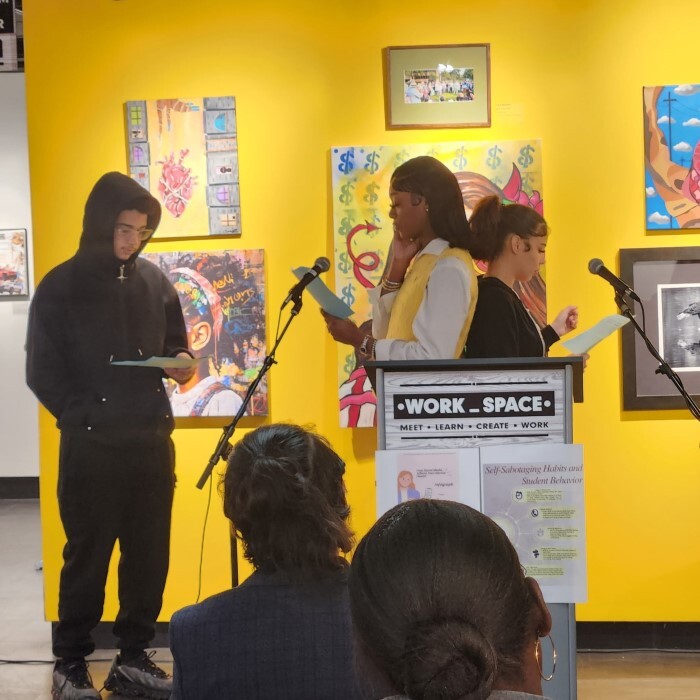
Students perform an original poem connected to findings from a research study they conducted. Credit: Patty Vega-Dones for Manchester Public Schools
The Flight Academy began as a semester-long, in-district program prioritizing seniors who were off-track for graduation—students often navigating disrupted schooling, family crises, mental health challenges, or systems that had never fully seen their strengths. Many weren’t failing because they lacked ability; they were carrying circumstances that schools hadn’t been designed to meet. Too often, the response to this reality is to narrow options or lower expectations. We wanted to interrupt that pattern, not reinforce it.
We started in a borrowed corner of a district building with three staff members and a small group of students. No new facility. No extra departments. Just a simple, urgent question:
What if we designed a school program around the students who were closest to being pushed out—and refused to lower expectations for them?
These were students who had been chronically absent. Students who were off-track. Students who had learned to see school as something happening to them, not for them.
They didn’t need easier work. They needed meaningful work, adults who knew them well, and a structure that made success possible.
Designing for Rigor, Agency, and Real Pathways
We built Flight Academy around a handful of non-negotiables:
An emphasis on community and a culture of collective success
Interdisciplinary, project-based courses that were accelerated, not remedial, and rooted in grade-level rigor
Flexible scheduling and credit-bearing learning that has meaning beyond the classroom
Deep post-secondary planning embedded into the weekly experience
Wraparound support built into the daily design, not reserved for moments of crisis
Immediate, human-centered interventions–if a student isn’t present by 9:05, we’re calling, problem-solving, and partnering with families in real time rather than waiting for problems to grow
We didn’t perfect the model before launching. We built, listened, adjusted, and kept going.
We are now in our fourth semester, serving our fourth cohort of students in what remains, for now, a semester-long model. Each group has shaped the program in different ways. We’ve redesigned courses, shifted online platforms, reworked schedules, and refined our approach to college and post-secondary planning based on feedback and what we know about the incoming class. By the end of each semester, students have typically met graduation requirements and transitioned into college, work, internships, or other next steps.
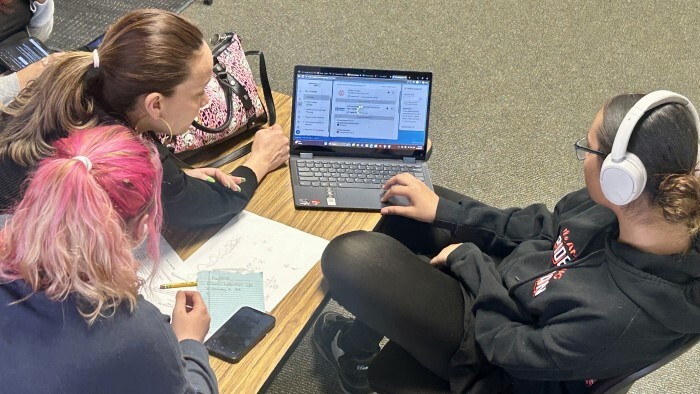
Flight Academy students work on college applications with support from a staff member. Credit: Amanda Navarra for Manchester Public Schools
What Happens When Design Changes, Not Students
What began late summer in 2024 as a conversation and a small pilot has evolved into a program that continues to challenge long-held assumptions about what students labeled “off-track” are capable of when rigor and relationships exist together.
In our small program, students who had struggled for years begin producing excellent work at a rapid pace. Within one semester, students who had been failing classes are writing 10-page research papers. Students who had never passed Algebra are succeeding in higher-level math. Attendance improves, even though credits aren’t based on seat time.
One senior reflected during his graduation story,
“Flight Academy is the hardest I have ever worked in school. It’s the first time I’ve felt confident and like the work really mattered.”
This year, 100 percent of our seniors applied to at least seven four-year colleges, our state community college system, and an additional pathway such as a job, trade school, or internship. Every student completed the FAFSA. Acceptance letters are arriving daily—sometimes accompanied by long conversations with admissions offices to help them understand a transcript that tells only part of a student’s story.
These are the same students many systems quietly assume are “not college material.”
Instead of creating a program that lowered expectations or asked students to be more compliant, we created one that asked them to show what they’re capable of. Then we built the relationships and designed the systems that helped them do it.
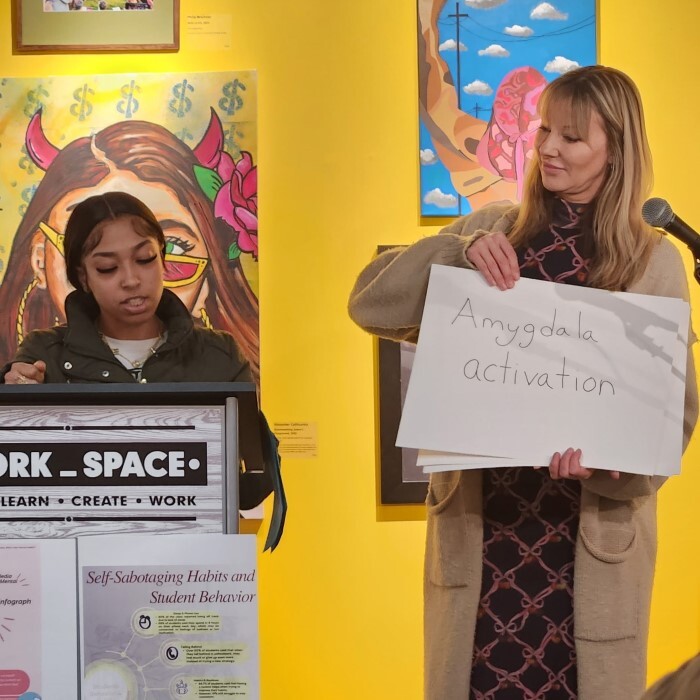
One student presents at poetry night to an audience of students, staff, and families. Credit: Patty Vega-Dones for Manchester Public Schools
Our Biggest Lesson So Far
You don’t need a perfect master plan to begin redesigning school. You need a clear purpose, a small team willing to learn alongside students, and the courage to start with what you have.
That doesn’t mean the work is easy or endlessly sustainable without support. Right now, we are three educators trying to meet growing demand, and we know that expanding this work—reaching students earlier, building stronger pathways, and sustaining the model long-term—will require deeper investment and partnership.
But waiting for “perfect” would have meant waiting while students slipped further away.
There are students in every district right now telling adults, in a hundred different ways, “This isn’t working.”
The question isn’t whether we can do school differently. It’s whether we’re willing to listen and begin in whatever ways we can.
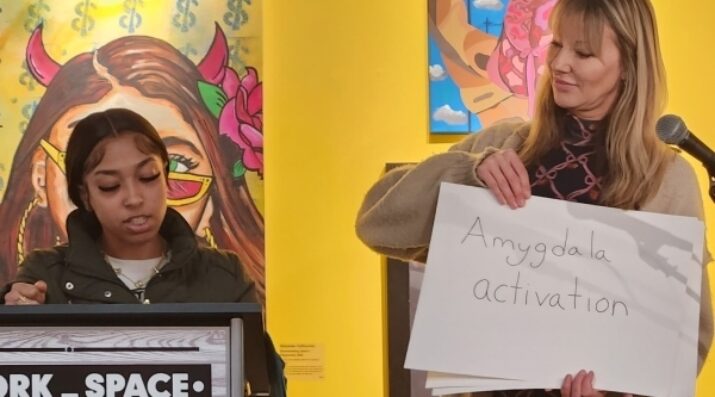
Photo at top, credit: Patty Vega-Dones for Manchester Public Schools
Amanda Navarra
Innovation & Research Strategist, Manchester Public Schools
Amanda Navarra is the innovation and research strategist for Manchester Public Schools in Manchester, Connecticut