We Redesigned School for Kids. What about Professional Learning for Teachers?
Christopher Kenny
Assistant Principal of Murch Elementary
District of Columbia Public Schools
in Washington, D.C.
Topics
Educators are the lead learners in schools. If they are to enable powerful, authentic, deep learning among their students, they need to live that kind of learning and professional culture themselves. When everyone is part of that experiential through-line, that’s when next generation learning thrives.
A response to Jal Mehta's article:
"How to Organize for Human Development: What Schools Can Learn from Summer Camps"
As I finished reading about how a week at a summer camp led professor Jal Mehta to reflect on what schools can learn from camps, I was surprised to find that many of the principles he cited also resonated for me.
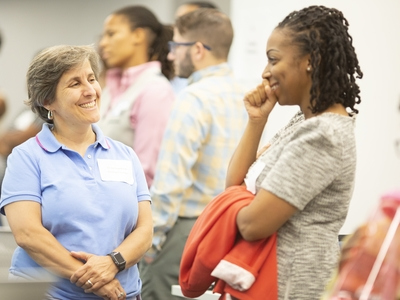
I have 15 years of experience in education in Washington, D.C., and have probably sat through over 1,000 hours of professional learning. In the majority of these sessions, we sit through seemingly endless slide presentations. Often, the presenters are rolling out a "new" district strategy, or changes district leaders expect and the accountability measures that go along with them. Sometimes questions like "How can we provide more choice in students’ learning experiences?" or "What about joy?" are sprinkled in as short ice breakers or turn-and-talks. But for the most part, we sit and information is fed to us. It's planned down to the minute. They say it is low stakes, but it doesn't feel like it.
The gap between an ideal student learning experience and the typical professional learning sessions that teachers experience in large school auditoriums is palpable. I know this gap firsthand, because this summer I experienced the opposite of it at Harvard's Deeper Learning Ed Camp, an "off the grid" summer camp for educators led by Jal's team at the Deeper Learning Institute.
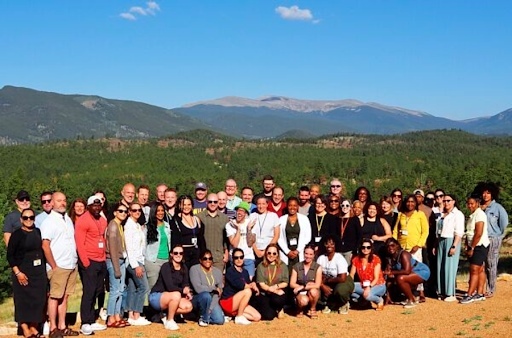
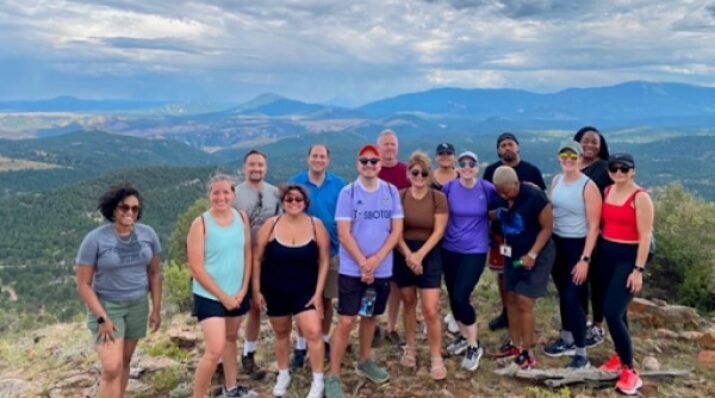
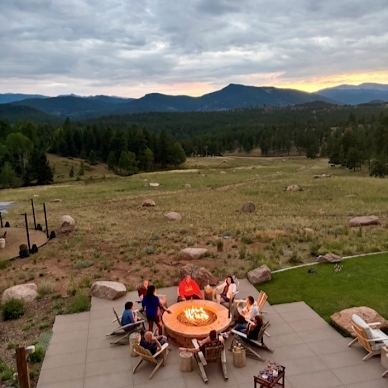
At Ed Camp we grappled with our own problem of practice, had significant work time where experts like Ron Berger pushed our thinking, and attended optional short professional learning sessions that directly aligned with the idea/materials we were building. After our not-too-short but not-too-long work sessions, we went outside to the beautiful Colorado mountains and had the option to go on guided hikes to build community. There were unlimited healthy (and non-healthy) snacks to keep us going strong.
It didn't take long to notice that this wasn't organized like any professional learning I'd sat through before. It was organized like a camp. Like the best summer camps, Ed Camp was intentionally designed around how people learn and grow through experience, choice, community, reflection, and time to pursue their own interests, not simply around delivering information. Jal's team at the Deeper Learning Institute designed the experience with this learning-and-development model in mind, creating a camp for educators that applies many of the same principles that make camp such a powerful experience for young people.
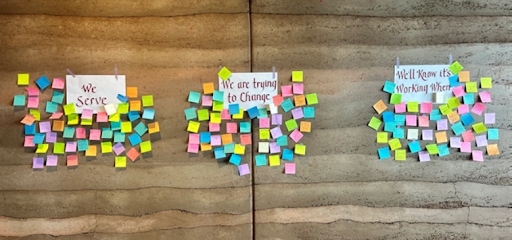
Four of the principles from Jal's article resonated particularly strongly for me at Deeper Learning Ed Camp.
1. Structure with Choice, Not Structure instead of Choice
The camp that Jal attended with his family, and which inspired his article, ran on a published schedule that everyone could see and choose from, not a "go here, then go there" march through the day. Deeper Learning Ed Camp works in a similar way. It is built around a structured design process that pushes you to think differently about your theory of change. There are sessions that adapt to your needs and multiple optional ones to support your learning. There’s also a lot of independent work time when experts in the field are available to support your success. Compare this to your standard professional learning day and I know you'll notice some differences.
2. Room to Breathe
Camps build in downtime on purpose, because relentless scheduling is exhausting and unproductive. Deeper Learning Ed Camp did the same, allowing for real space to think, process, and talk informally between sessions, not just squeeze in a bathroom break before the next mandatory block. While sitting outside during one of the breaks, I was chatting with a teacher from Connecticut about my work, and she shared something that opened up a blind spot in my thinking. I used this moment to update the professional learning session I was writing about and made it even stronger.
3. Many Ways to Matter
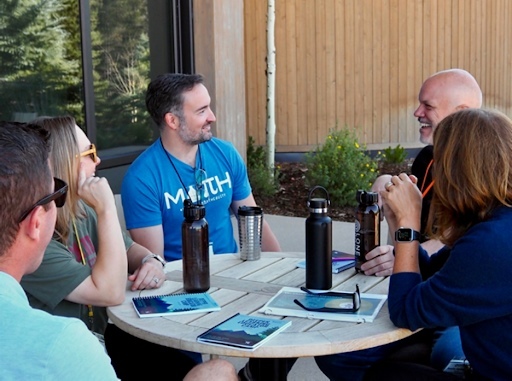
At most professional learning, there's one expert on a stage, and everyone else is a recipient. Deeper Learning Ed Camp flips that: the teachers and leaders in the room are the experts. Whoever proposes a discussion leads it; whoever has something to offer, offers it. During our time to ideate on our work, we all partnered up and pretended to be someone who may push back on our work and the materials we were creating. It led to great conversation and adaptation. It created stronger relationships with people as we empathized and laughed about our acting skills and past experiences with pushback.
4. A Spirit of Playfulness
This might be the principle professional learning violates most often. Somewhere along the way we decided professional learning had to look serious to be taken seriously. However, if we allow for fun and playfulness, we can create even stronger connections with our colleagues. While eating dinner with some new educator friends, we played guess our age, which led to lots of deep belly laughter and sharing of our experiences. On the last day of Deeper Learning Ed Camp, we decided to start the party with some karaoke and got a large group of people together that didn't know each other to start singing (I led off with Backstreet Boys – I Want it That Way).
How It Changed Me
Ed Camp was invigorating, it prepared me mentally and emotionally to be back in school and have my staff start their professional development in three weeks. From all of the sessions and discussions I had, I now think about teacher autonomy as well as how I ensure teachers have choice and time to sit in the learning and build and collaborate with others. I've sat through a lot of professional learning experiences. Deeper Learning Ed Camp was the first time in a while when I left with more energy than I walked in with.
Same Conditions, One Level Up
If we believe students are capable of powerful learning when we build the right conditions, the same has to be true for the adults responsible for creating those conditions. Autonomy, community, playfulness, room to breathe: these aren't perks we owe teachers as a "nice to have." They're the same design principles that make learning possible, applied one level up the system. A staff that never gets to experience those conditions themselves will struggle to build them for kids. You don't need a week at camp or a trip to a Harvard-led professional learning experience to test this. Pick one staff meeting or one professional learning block this year and hand it over to an unconference structure: let the agenda flow from a process-driven schedule, protect fifteen minutes of unscheduled time, play a game as an opener, and see what your staff does with it.
Credit, all photos: Giselle Boulanger
Christopher Kenny
Assistant Principal of Murch Elementary, District of Columbia Public Schools
Chris Kenny (he/him/his) is an experienced educator and school leader who has served as a teacher, DCPS district leader, and administrator, with expertise in mathematics, special education, inclusive practices, and instructional coaching. He has been working in D.C. education for 15 years, is passionate about building strong relationships, supporting educators, and creating equitable learning environments where every student is known, supported, and challenged to reach their full potential. Follow Chris on LinkedIn.