Cultivating Change: Women Shaping Tomorrow’s Learning Environments

Mickey Revenaugh, Shiren Rattigan, and Manisha Snoyer
Topics

Next generation learning is all about everyone in the system—from students through teachers to policymakers—taking charge of their own learning, development, and work. That doesn’t happen by forcing change through mandates and compliance. It happens by creating the environment and the equity of opportunity for everyone in the system to do their best possible work.
At the heart of innovation in education are women who are building new models that honor learners as whole human beings.
Women are at the heart of today’s most exciting shifts in education. From grassroots homeschooling resources to micro-schools to national online platforms, women are building, innovating, and sustaining models that defy convention and meet the needs of learners in more human, flexible, and future-ready ways.
Each of us comes to this work from different directions. Shiren founded Colossal Academy and Colossal Academy Online, centering education on real-world, relevant skills for the 21st century and beyond. Manisha built Modulo, a marketplace curating the best homeschooling resources, tutors, and curriculum, making it easier for families to find what fits their unique children. And Mickey, as co-founder of Connections Academy and author of the forthcoming School’s Out: Why Families Are Choosing Unconventional Education, has spent decades exploring and expanding what K–12 education can look like outside of traditional classrooms.
Despite our different paths, we’ve witnessed the same truth: women are leading the charge.
Why EdTech Is Led by Women
In mainstream headlines, the splashiest stories often spotlight venture-backed EdTech companies with most of them led by men. Yet when you trace the roots of real, bottom-up innovation, you find women at the center. Many are teachers who saw new possibilities during the pandemic, or mothers meeting the needs of their own children and creating resources that spread to thousands of others.
That isn’t about biological destiny; it’s about proximity and perspective. Women have historically been more likely to manage the day-to-day realities of children’s lives, and that closeness makes them natural innovators in education. They see what works, what doesn’t, and what is missing. And, perhaps more importantly, they share. As Shiren reminded us, teaching and mothering are both communal. Innovation doesn’t happen in isolation; it happens in circles of women exchanging ideas, support, and hard-won lessons.
Redefining Education for a Changing World
As many know, much of the traditional school system was built in an industrial era, designed to prepare students for factory work. But that world has changed, and our models of learning need to change with it.
We see education not as the transfer of information, but as preparation for entrepreneurship, adaptability, and purpose. Students need to be problem-solvers, collaborators, and creative thinkers who can thrive in uncertainty. They also need to understand that true success isn’t just profit-driven; instead, it must also value people and the planet.
What Women Bring to Entrepreneurship
Running schools, platforms, and movements isn’t easy. There are constant pressures to scale faster, raise more money, or package innovation into something easily measurable. But as women, many of us have learned to trust our intuition in the face of external pressure. Sometimes innovation looks like growth; sometimes it looks like staying small, steady, and sustainable.
This requires resilience and self-trust. It means navigating setbacks without giving up, tolerating the “small cuts” along the way, and leaning on one another for strength. Our structural support is not always found in handbooks or accelerators. It’s in each other.
Guarding against Burnout
This work asks everything of us. It’s mission-driven, entrepreneurial, and deeply personal. And so we’ve had to learn the hard way that caring for ourselves is non-negotiable. We are not our projects and passions; self-care is part of the work.
We are learning to separate our identities from the outcomes of our ventures. If a school or platform grows, contracts, or evolves into something new, that doesn’t define our worth. What matters is that we continue to follow the mission, create spaces of connection, and model for the next generation how to live and lead with integrity.
A Movement, Not Just a Moment
The future of education is already being rewritten. Families are exploring alternatives at unprecedented rates. Students are flourishing in micro-schools, hybrid programs, online academies, and homeschooling communities. And at the heart of it are women—educators, mothers, leaders, entrepreneurs, or a combination of them all—building models that honor learners as whole human beings.
The future is female not because women alone can lead this movement, but because women already are. And together, with all who believe in learning that is more human, more just, and more expansive, we’re shaping what comes next.
Listen
NGLC is grateful for our collaboration and partnership with EDU Café Podcast that brings fresh voices and insights to the blog. Listen to the full episode of the podcast that inspired this article.
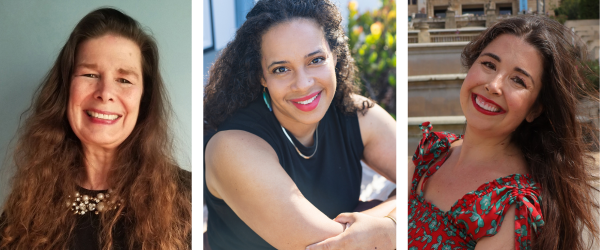
The authors: Mickey Revenaugh, Shiren Rattigan, and Manisha Snoyer
Photo at top: NGLC licensed image, by SDI Productions via iStock
Mickey Revenaugh, Shiren Rattigan, and Manisha Snoyer
Mickey Revenaugh (she/her), Author of School's Out, Co-Founder of Connections Academy
Brooklyn, New York
Mickey Revenaugh is a global digital learning pioneer, advocate, and author. She is the co-founder of Connections Academy, a ground-breaking online school provider that launched in 2001 and now serves more than 110,000 K-12 students around the world as part of Pearson. Previously, Mickey helped launch the E-rate to wire every American school to the internet, and was education technology editor at Scholastic. Mickey is now the author of SCHOOL’S OUT, forthcoming in 2026 from Johns Hopkins University Press. Mickey holds a B.A. from Yale University, an M.B.A. from New York University, and an M.F.A. from Bennington College. Follow Mickey on LinkedIn.
Shiren Rattigan (she/her), Founder & Head of School, Colossal Academy
Fort Lauderdale, Florida
Shiren Rattigan is the visionary founder and director of Colossal Academy and Colossal Academy Online, a microschool network that focuses on personalized, experiential learning with an entrepreneurial edge. With over 14 years of experience in K-12 education, Shiren is passionate about empowering students to take ownership of their learning through real-world projects, including launching their own businesses. At Colossal Academy, Shiren has pioneered a model that integrates core academics with entrepreneurship, preparing students for the future with practical skills and competencies. As an advocate for inclusive and equity-driven education, Shiren works to ensure all students have access to transformative learning experiences. Follow Shiren on LinkedIn.
Manisha Snoyer (she/her), Founder and CEO, Modulo
New York, New York
Manisha Snoyer is the founder and CEO of Modulo, the largest global marketplace for homeschooling resources. She previously led SchoolClosures.org, which supported over 100,000 families during the pandemic, and founded CottageClass, which played a key role in launching the U.S. microschool movement. A lifelong educator, she has taught more than 2,000 students across three countries and is widely credited with coining the term modular learning. Manisha graduated Summa Cum Laude from Brandeis University with degrees in American studies and French literature, and minors in peace and conflict studies and environmental studies. Follow Manisha on LinkedIn.