Why Youth Voice Matters: Learning From Real Student Stories

Kristen Vogt (she/her/hers)
Senior Program Officer
NGLC
in Philadelphia, Pennsylvania
Topics
Next generation learning is all about everyone in the system—from students through teachers to policymakers—taking charge of their own learning, development, and work. That doesn’t happen by forcing change through mandates and compliance. It happens by creating the environment and the equity of opportunity for everyone in the system to do their best possible work.
Youth voice is essential to next gen learning. Explore what youth voice is, why it matters, and how real student stories and experiences support more equitable, learner-centered education.
Wisdom is often attributed to elders, those who have spent decades absorbing the stories of generations before them, who have lived full lives themselves, and who have learned some things along the way that make them wise. Those of us who work in education can attest to the wisdom of groundbreaking educators, wisdom that has withstood the test of time—Maria Montessori knew a thing or two about learning!
But I have to say, some of the wisest insights I’ve heard recently have come from young people. My favorite articles on the Next Gen Learning blog are the ones written by students. It’s because they are truth-tellers; they have no choice but to paint for us a portrait of learning in schools today that’s so painstakingly true, it’s impossible to ignore. They have the wisdom of direct student experience that no one else can replicate. Not even Maria Montessori. Take these nuggets of wisdom:
“The original mindset that the education system lays on you is to follow the rules, meet specific standards, and to conform. Project Invent, on the other hand, paves a way for students to open up, to truly be their authentic selves, to ask questions, and truly challenge themselves—rather than solving fake challenges that they are unmotivated to complete.” –Sam Nguyen, High School Student in North Carolina
“High schools traditionally focus on directing every detail. However, in the workplace success depends on making decisions, adapting, and learning from mistakes. By stepping back, educators give students space to discover their own abilities.” –Miriam Yunus, College Student in Wisconsin
Every year at NGLC, we carve out space to collect, honor, and share stories that demonstrate how essential youth voice is to any vision of next gen learning. But in order for their wisdom to make a difference in schools, adults need to be listening, willing to work in partnership, and taking action on students’ insights and recommendations.
Exploring answers to five questions can open school communities up to the wisdom of our nation’s youth:
What is youth voice and why does it matter?
How do innovative learning models support youth voice?
How might schools center youth voice in school decision-making, teaching and learning practices, and solving complex and pervasive challenges in K-12 education?
What are the challenges and opportunities when school communities embark on a true partnership with students?
What steps can school communities—youth and adults together—take to embrace the wisdom of youth voice?
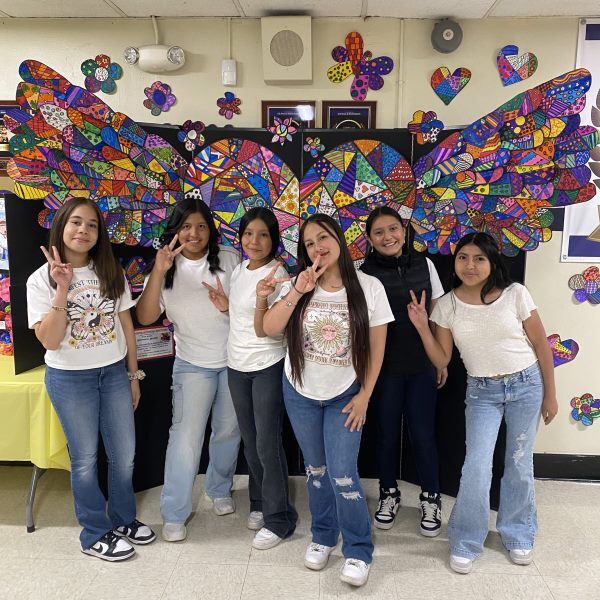
Hackensack Middle School students. Credit: Dee Kalman and Amy Aguasvivas.
What Do We Mean by “Youth Voice?”
Youth voice strategies center the voices of those most closely affected by educational challenges—the students themselves. At NGLC, when we talk about youth voice, we are talking about all of the ways that young people have a voice in their learning and their school. As described in our Designing for Equity Toolkit, we advocate for youth and adults to work in true partnership to advance equitable teaching and learning in their schools. We acknowledge so many in our network, especially our partners at UP for Learning, Sunnyside Unified School District, 228 Accelerator, and National Equity Project, for leading us and the field in this effort.
Often, adults will reference student surveys, or perhaps listening tours and focus groups, when describing ways they support youth voice. These tools are efficient ways to get input from a large number of students in a short period of time to inform decisions. They are important. However, decision-making remains in the hands of the adults, and students have limited options to contribute their ideas. Using only this approach ignores the agency students have to direct their learning. And if students share a perspective that differs from the final decision or action taken, they may get frustrated and lose trust.
Truly centering student voice in education requires a shift in power. Successful youth-adult partnerships take a more inclusive approach to decision-making, resulting in more equitable student experiences and outcomes. Take these examples of students and adults partnering as co-designers: Students design their senior capstone project, guided by a teacher advisor. Two students join their school’s instructional leadership team, attending meetings, participating in instructional rounds, and co-designing instructional initiatives. A districtwide committee charged with improving multilingual education includes teachers, students, parents, community partners, and family advocates. These examples highlight essential foundations of authentic youth voice:
Student agency
Active and equitable youth participation
Mutual respect for the strengths and perspectives provided by both youth and adults
Shared decision-making
Because students have not had this kind of opportunity in their prior schooling, they need support to navigate expectations, and schools need to create the conditions that encourage and honor their contributions. Adults need support too, because educators have rarely been asked or expected to connect with students as equal partners.
Two middle school students in Arizona explain what makes their school experience meaningful. You’ll hear them highlight teamwork, interactive lessons, and an environment that supports personal growth.
Why Youth Voice Matters for Learning and Innovation
We know from research like that of Daniel Pink that people are more motivated when they have autonomy, mastery, and purpose in their work. The same is true for students and learning.
Choice in their Learning Experience: When youth have a say in what they learn, how they learn, and how they demonstrate their learning, they become more deeply invested and engaged in the process of learning. This is as true in elementary school as it is in high school, and in self-contained classrooms as much as it is in honors courses.
Agency in Learning: When learners take on the cognitive lift for learning, like making active choices, researching evidence, providing critical analysis, engaging in academic discourse, and more, they are more motivated to learn and feel a sense of ownership.
School Improvement: When youth contribute to school initiatives and help develop the structures behind next gen learning, those initiatives are more likely to work because the people most impacted by them participated in developing the solution.
Student-Centered Evidence: When youth voice is embedded in assessments and evidence of next gen learning practices includes youth voice, schools can make informed decisions about learning they can trust.
District Transformation: When students actively contribute to districtwide efforts, such as writing a district’s strategic plan, developing a graduate portrait, establishing an equitable grading policy, or implementing project-based learning, the transformation will authentically reflect students’ needs and goals and is more likely to improve outcomes.
What is the power of youth voice? Students feel a sense of belonging when their voices are taken seriously. And they learn durable skills in the process, from communication and collaboration to critical thinking, civic responsibility, and leadership. This is especially true for students at the margins, from groups that have been under-served, whose voices have historically been silenced. Youth voice matters in any effort to advance equity in education.

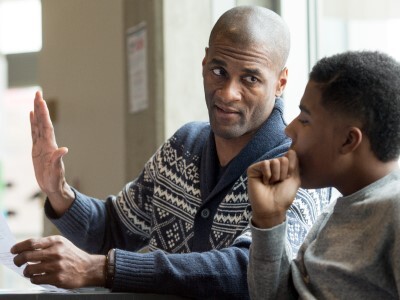
A student leads a parent-teacher conference. Credit: Two Rivers Public Charter School
Stories that Show Youth Voice in Action
Innovative Learning Models that Amplify Youth Voice
Next gen learning designs that are based on learning science, evidence, and pedagogical insight provide more opportunities for youth voice than traditional instruction. Here are a few examples:
Personalized learning tailors student experiences to their goals, talents, and interests.
Experiential learning tasks students to develop academic knowledge and skills by completing hands-on projects, internships, community service, and more.
Competency-based models call on students to give voice to their own learning path and demonstrate proficiency before moving on to the next unit.
Culturally responsive education gives voice to students’ cultural backgrounds, incorporating their’ unique experiences and identities in the learning experience.
These examples of student voice in the classroom are just a few stories that demonstrate the ways that innovative next gen learning strategies embrace youth voice:
Student-Led Conferences
“Student-led conferences allow us to take ownership of our learning. Only we know how we are doing and where we are running. There isn’t always going to be an adult there to help us.” –6th Grade Student, Two Rivers Public Charter School in Washington, D.C.
Student Research Day
Sanchel Hall of Sumner County Schools in Tennessee describes how she co-plans her middle school science lessons with students using a Student Research Day, and offers this example:
“During a co-planning session, Cylie Schulz took ownership of locating an instructional resource and discovered a PhET simulation that aligned closely with the learning target. Through this process, she recognized how the resource supported her own learning needs. ‘I learned more because I feel like I learn by physically doing and seeing things happen,’ she shared. Her reflection highlighted an important insight: when students are empowered to select resources that match their learning styles, comprehension deepens, and abstract concepts become tangible.”
Real-World Learning
“The teachers…were a guide, not an instructor; they were our support in failure and the microphone to our voices.” –Jackie Grovier, High School Student in Des Moines, Iowa
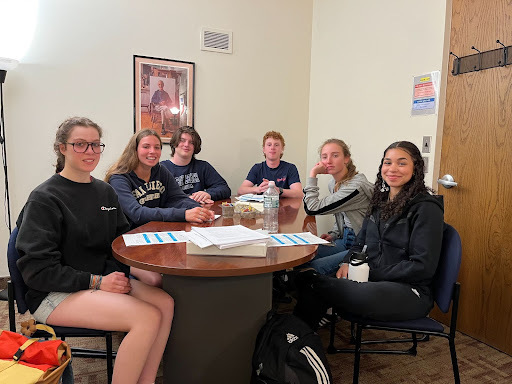
Students serving on a Student Adult Advisory Board.
Credit: Monument Mountain Regional High School
Youth Shaping School Policies and Programs
Youth contribute to the life of their schools in many ways, and these stories suggest ways that youth can influence and change school policies and programs, while developing essential skills along the way.
Advocacy
“The next day I started to plan. I got over 100 signatures from my fellow classmates and worked with the advisors of my school’s Black Student Union to discuss the best way to approach the administration about the course…. A student with an idea was the first step and the school administrators being open to talk with me and truly listen to what I had to say made this endeavor a success.” –Mackenzie Campbell, High School Student in Connecticut
Advisory Boards
The Student Adult Advisory Board (SAAB) at Monument Mountain Regional High School in Massachusetts brings youth and adults together to collaborate on changes they’d like to see in their school. One student on this youth-adult partnership board reflected on her efforts to address grading in her school:
“Our specific subcommittee has to do about grading and policy and teaching, and teachers obviously have a lot going on. They have a lot of stress. They have amazingly difficult jobs, and it's hard for them to want students to come in and, in a way, critique what they're doing. So I think trying to cultivate a full school environment where everyone understands we are all here to help each other and learn from it. And the other part that I notice on the student side is that it's really easy when something isn't going right, especially with your grades, to place blame on the teachers; and then it turns into hostility and that obviously is not effective for any sort of partnership. So it’s important just going into things with an open mind and being open to understanding different perspectives.”
NGLC Learning Excursion Teams
Last fall, 19 students from nine school communities joined their teachers, counselors, family liaisons, and school and district leaders on a professional learning experience to visit innovative schools serving multilingual learners in the Washington, D.C. area. They worked in partnership with the adults on their teams to develop actions to improve learning and outcomes for the multilingual learners in their school communities, from newcomer advisories to peer mentoring to instructional strategies that integrate content and language learning.
A team of students and adults from Brockton Public Schools in Massachusetts share their key takeaways from the NGLC Learning Excursion as well as their co-designed plans to improve multilingual learning in Brockton schools.
Learners Influencing Their Local Communities
When innovative learning models connect learning to the local community, through industry and community partnerships, community-based projects, and community-wide initiatives, youth begin to see their role in civic engagement and their schoolwork becomes more important and meaningful.
Youth-Led Conferences on Social Issues
“In Impact's first three-year Health Canada-funded project, not many schools were ready to get involved. But the project led to the region’s first completely youth-developed conferences, which staff from local school districts did attend. People left these conferences thinking differently about the roles young people can play in their communities. Some attending school staff moved into administrative roles, where their experiences with this work challenged them to try to do things differently.
During Impact's next project, the Abbotsford School District agreed to provide a building to host a much-evolved youth-led conference. This conference focused on topics not often discussed at any community conference, let alone one where youth were facilitating workshops based on their lived expertise of issues like domestic violence, self-harm, substance use-related harm reduction, borderline personality disorder, Indigenous healing modalities, gender fluidity, etc.” –Brian Gross, Matsqui-Abbotsford Impact Society, and Nathan Ngieng, Abbotsford School District, in partnership with youth
Projects that Solve Real Problems for Real People
“Our community partners knew us; they were counting on us. We had something to prove. My team felt like we had to put in the extra effort to create something that would make our partners happy. It was special because we weren’t motivated to get a good grade; we were motivated to help people.” –Gabriel, High School Student in Chicago
“It was so hard to create something that our community partners actually liked. We had to balance our own goals—making a usable prototype—with our partners’ individual needs and preferences…. It was a game changer. We got a taste of what it’s like to design something for a real person’s needs. It was so different from any other school project we had ever worked on.” –Abel, High School Student in Chicago
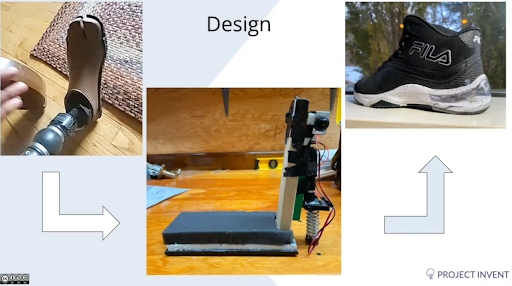
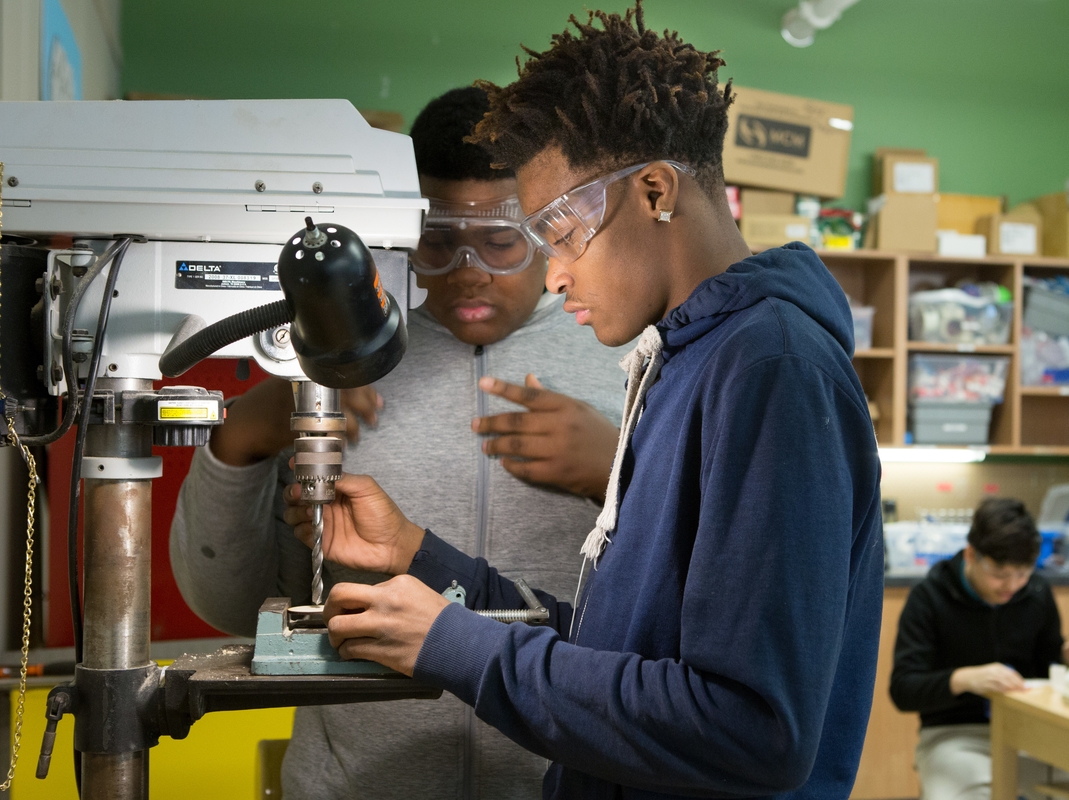
This prosthetic was designed for a community partner by a group of students.
Credit: "Team SNAILS" at Pierrepont School, via Project Invent.
Submit a Youth Voice Story!
Help us celebrate youth voices and demonstrate why youth voice matters.
- Ask a student to write or co-write an article
- Write about learning innovations that support youth voices, or how youth are co-designing innovations
Youth Voice Opportunities and Challenges
NGLC advocates for youth voice in next gen learning and school redesign because we know the opportunities it presents are priceless. But moving to a school system that by default includes young people as co-partners—where it is an expectation, not an exception—comes with some challenges alongside those opportunities.
Opportunities
Increased ownership of learning: Outcomes improve when youth can make important decisions about their student experience.
Better solutions: Because students are the most directly affected by educational challenges and any solutions to address them, their perspectives provide greater clarity about the challenge and more confidence that the solutions will actually work.
Youth leadership development: Students can practice and improve their ability to influence their experience and the world around them, gaining confidence as well as durable skills like communication, problem-solving, and advocacy.
More inclusive and equitable schools: The majority of students in public schools are students of color whereas the majority of teachers are White. Increasing student voice increases the diversity of representation in school decision-making, potentially identifying challenges, opportunities, and student experiences that may be overlooked by staff alone.
Challenges
Limited time and resources: Time is the greatest resource in schools, and it is always limited. Decisions might be made more quickly without student voice, but when students are involved, decisions become more effective.
Discomfort with sharing power: True student voice shifts the typical power dynamics in schools, which can make both adults and students uncomfortable as they navigate new ways of interacting with each other. This is especially true when the expectations and norms for working together are not made explicitly clear for everyone.
Risk of tokenism: To avoid tokenizing student involvement, schools should avoid “one and done” opportunities for students to contribute, presenting ideas on behalf of students, or listening without responding or following through on commitments. As members of the Abbotsford School District in British Columbia described this dynamic: “However, unknowingly, these student voice activities in the school district reinforced what historically has been done in schools to marginalize the voices of students. It tokenized the involvement of students in issues of importance when it comes to key strategic decisions about their learning in the classroom. This led to an increasing disconnect between students and teachers.” To shift away from tokenism, senior leaders at Abbotsford intentionally engaged with students at the margins to understand their school experiences (positive and negative!) and took steps to make their change process “collaborative, co-constructed, inclusive, and transgressive.”

A group of students with their teacher. Credit: CityBridge Education
Start Centering Meaningful Youth Voice
Educators and students who are interested in increasing youth voice in their schools can begin with these steps.
Listen authentically: Use strategies like empathy interviews and fishbowls. Ignore any instincts to explain or diminish; instead ask questions and focus on understanding.
Be open to ideas different from your own: Too often students are told what they can’t do or why their ideas won’t work. Because of the power differential between educators and students in schools, this shuts them down from continuing to engage. An open mindset and a willingness to try new things can begin to shift these dynamics and encourage even more honest and creative contributions from students.
Engage in dialogue: Differentiate between inquiry sessions focused on understanding, brainstorming sessions where wild ideas are encouraged, and decision-making sessions where constraints need to be considered.
Invite youth to contribute: Students can be involved in nearly every decision about their learning or how their school operates, so there’s no time like the present to invite youth to join you. Look to involve students who are at the margins, who are often overlooked, or who are less engaged in school. You might be surprised by what you learn from them and what you can create together.
Start small: Do something. Starting small is a great way to lower the stakes for everyone involved while also demonstrating ways to increase student voice, agency, and partnership in education. Build trust by responding to feedback and following through on any commitments made.
Youth voice matters. It is the foundation of student-centered learning. As youth and adults at Abbotsford School District shared:
“Our journey with student voice has shown that it can impact the school system in multiple ways and that taking a student-centered approach will be essential in the reshaping of our education system. While resistance is to be expected, taking a collaborative and authentic listening approach with students holds great promise in achieving our collective goal of improved student success.”
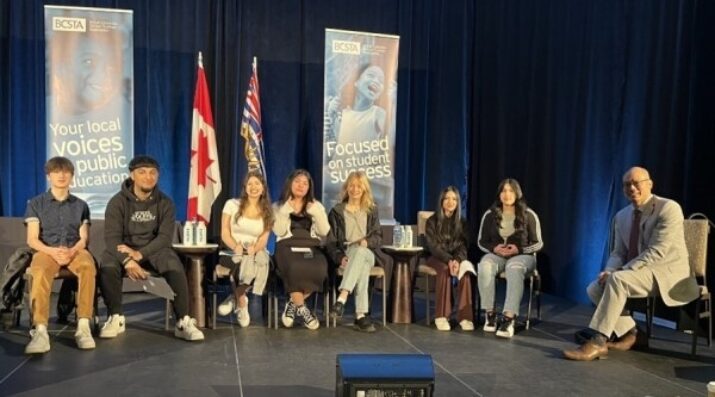
Photo at top courtesy of Abbotsford School District
Kristen Vogt (she/her/hers)
Senior Program Officer, NGLC
Kristen Vogt, senior program officer for NGLC, helps school communities tell their stories of transformation and learn about effective strategies, promising practices, and supportive conditions to transform learning. Her goal is to help school communities lead the way to a more equitable and just future of learning for our nation’s youth. Over a dozen years, she has supported school-based teams of educators, students, and key partners to build their knowledge and skills of leading transformation and has helped connect forward-leaning educators to learn with each other. She also leads the organization’s efforts to center diversity, equity, inclusion, and justice in its mission and practice.