Young People Have Greatness—We Just Need to Listen

Denise Reading
Founder and CEO
Future Plans, Inc.
Topics

Today’s learners face a rapidly changing world that demands far different skills than were needed in the past. We also know much more about how student learning actually happens and what supports high-quality learning experiences. Our collective future depends on how well young people prepare for the challenges and opportunities of 21st-century life.
Young people already carry greatness. Our responsibility is to help them see it, and then build the bridges that let them use it.
If I could change one thing about how we approach young people today, it would be this: we would spend less time telling them who they should be and more time helping them discover who they already are.
Across my work with students in rural, urban, and suburban communities, I’ve seen a consistent truth: young people want to contribute. They want purpose. They want to matter. What they often lack is not motivation—it’s recognition. No one has helped them clearly see their own greatness or connect it to a real pathway forward.
When that happens, everything changes.
The Most Powerful Question We Ask Young People
In our coaching conversations with young people at Future Plans, we don’t begin with test scores, grades, or resumes. We begin with questions:
What are you naturally drawn to?
What do you enjoy learning about?
When do you feel most capable?
What problems do you like solving?
Then we reflect back what we see in their strengths, aptitudes, interests, and values.
For many students, this is the first time an adult has spent focused, uninterrupted time talking about their potential rather than their deficiencies.
One of the most common things students say at the end of these conversations is simple and heartbreaking:
“Thank you for listening to me.”
“Thank you for seeing me.”
We should never underestimate how powerful that is.
Young People Are Not Disengaged—They’re Unseen
There’s an often repeated narrative that young people are distracted, disengaged, unmotivated, or entitled. But that’s not what I see.
I see young people who are uncertain where they fit. I see students who cannot connect what they’re being asked to learn with who they want to become. I see talent without translation.
When a student cannot see the relevance of learning, or cannot see themselves in the future being described, disengagement is a rational response.
But engagement rises quickly and naturally when they discover:
“I’m good at this.”
“This matters in the real world. I matter in the world.”
“There is a place for me.”
We’ve watched students transform their attitude toward subjects like math, technology, and technical training not because the curriculum changed, but because the meaning and application changed. When they see how their strengths connect to real careers and real contribution, effort follows.
Voice Comes before Pathway
We often try to hand young people a pathway before we’ve heard their voice.
We design programs. We build tracks. We create requirements. Then we ask students to choose among options they don’t fully understand and didn’t help shape.
When we reverse that process, when we start with student voice, pathways become clearer and more effective.
When young people articulate their interests and see validated data about their strengths, their choices become more aligned and more durable. They stop chasing what sounds impressive and start pursuing what fits.
Career Exposure Expands Identity
Many career decisions are driven by exposure, not ability. Students tend to pursue what they’ve seen.
If no one in their family works in healthcare, advanced manufacturing, cybersecurity, or engineering, those options may never feel real, even if they have strong aptitude for them.
When we expand exposure, we expand identity.
We’ve seen students reject career matches simply because they misunderstood the job title until someone explained what the work actually involved. With clarity comes possibility.
Young people don’t need thousands of options. They need clear, visible, believable ones.
Greatness Is Not Reserved for the Privileged
Greatness is not tied to zip code, income level, or family background. But opportunity often is.
That’s why it is essential that we build systems that help every student, especially those with fewer networks and fewer resources, discover and develop their strengths early.
I have watched students from the most economically-distressed communities demonstrate extraordinary resilience, insight, and capability once someone named their strengths and opened a door.
Talent is universal. Exposure is not. Our job is to close that gap.
One Conversation Can Change Direction
People sometimes ask what intervention makes the biggest difference in the life trajectory of students. They expect a program, a platform, or a curriculum. Often, it’s a conversation.
A single, structured, strengths-centered conversation can redirect how a young person sees themselves. We’ve had students come back years later and say they still remember that moment when someone described them as capable, needed, and full of potential.
Not praised vaguely but understood specifically. That kind of recognition sticks.
What Young People Need Most Right Now
Across communities and demographics, I hear the same needs expressed differently:
“Help me see where I fit.”
“Show me that I matter.”
“Give me a real chance.”
“Don’t decide for me. Guide me.”
Young people are not asking us to lower standards. They are asking us to raise belief.
They want a challenge. They want direction. They want honest guidance. But they want it anchored in who they are rather than who we assume they should be.
A Challenge to Every Adult
If you are an educator, parent, employer, mentor, or community member, here is my challenge:
Spend one uninterrupted hour with a young person focused entirely on their strengths and future. Ask questions. Reflect what you see. Connect their abilities to real opportunities.
Do not correct first. Discover first.
We cannot scale hope without scaling these conversations.
Young people already carry greatness. Our responsibility is to help them see it, and then build the bridges that let them use it.
Listen
NGLC is grateful for our collaboration and partnership with EDU Café Podcast that brings fresh voices and insights to the blog. Listen to the full episode of the podcast that inspired this article.
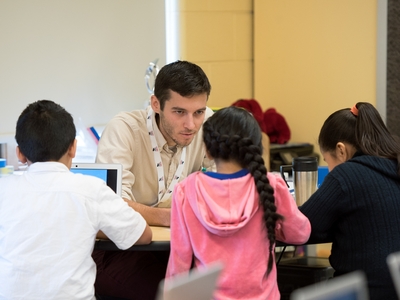
Photo at top by Allison Shelley for EDUimages, CC BY-NC 4.0
Denise Reading
Founder and CEO, Future Plans, Inc.
Dr. Denise Reading is the founder and CEO of Future Plans, Inc., a non-profit organization dedicated to ending poverty one person at a time by supporting individuals in discovering their own greatness and adding value to the communities they are a part of.