Building a Mental Wellness Tool Belt for Students and Educators

Kelly Murphy
Art Educator
in Maryland
Topics
Today’s learners face a rapidly changing world that demands far different skills than were needed in the past. We also know much more about how student learning actually happens and what supports high-quality learning experiences. Our collective future depends on how well young people prepare for the challenges and opportunities of 21st-century life.
Meditation calms the body’s stress response; over time, students learn how to notice their thoughts, regulate their emotions, and refocus their attention.
As an art teacher of 15+ years, I’ve seen firsthand how mindfulness through art can help build a toolbelt for you and your students in your classroom, not just for creativity, but for focus, emotional regulation, and even teacher well-being.
How Art and Active Meditation Support Students
Art therapy and active meditation address cognitive, behavioral, and emotional needs all at once:
Cognitive: When students are focused on creating a pattern or a drawing, they’re strengthening attention and working memory. It’s training the brain to stay present.
Behavioral: These practices slow things down. A simple prompt like, “Did a thought distract you while you were drawing? How can you bring yourself back?” helps students build awareness of where their attention is going.
Emotional: Anxiety is huge in today’s classrooms. Active art-making gives students a quick, effective way to ground themselves. Something as simple as patterning or doodling can quiet spiraling thoughts and create space for calm and focus.
Even if it’s just five or fifteen minutes, these practices become tools students can return to when they need them.
Helping Teachers Understand the Value
I know some teachers worry: “Are they just doodling instead of paying attention?” My answer: not if it’s guided. Doodling can absolutely be a form of active meditation, as long as the intention is to focus and not check out.
One of my favorite ways to help teachers understand is to have them experience it themselves. Imagine sitting through a lesson while practicing active meditation; you might be surprised at how much more you retain. When teachers feel the benefits firsthand, they’re more likely to trust the process with students.
The Science Behind It
For all the science-loving teachers out there, here’s why it works:
Meditation activates the parasympathetic nervous system, which calms the body’s stress response. Over time, students learn how to notice their thoughts, regulate their emotions, and refocus their attention. This is life-changing knowledge that I wish I had as a child growing up with anxiety.
Teachers Need It Too
These tools aren’t just for students; teachers need them just as much. We’re under so much pressure in schools today. When I attended a professional development on mindfulness and progressive muscle relaxation (PMR), I was in tears because I realized how much my body had been holding without me noticing.
Now, when my anxiety flares up, I know I can pause, breathe, and use one of these strategies from my “tool belt.” That awareness and knowledge is everything.
Practical Classroom Techniques
If you’re looking to try something simple, here are two of my favorites:
Breathing with Movement
Have students breathe in for a count of four, raise their shoulders, then exhale for four and release.
Just a minute of this resets the classroom energy.
Zentangle Drawing
Students fill sections of paper with repeated patterns.
It slows them down, focuses their minds, and creates space for mindfulness questions like: “Where did your thoughts wander?” or “What does your pencil feel like on the page?”
If Zentangle feels like too much to start, try having students draw their breath, making circles or spirals to match inhaling and exhaling. It’s easy, low-prep, and surprisingly powerful.
Building a Mindfulness “Tool Belt”
The key is variety. If you only ever use one technique, students (and teachers) will get bored. Try different activities, including but not limited to breathing, patterning, mindful walks, and even letting students vote on what they’d like to do. Giving them choice increases buy-in and makes these practices part of your classroom culture.
These tools are more than art activities; they’re life skills. They help students regulate, focus, and build emotional resilience. And when teachers embrace them too, classrooms become calmer, kinder, and more creative spaces for everyone.
Listen
NGLC is grateful for our collaboration and partnership with EDU Café Podcast that brings fresh voices and insights to the blog. Listen to the full episode of the podcast that inspired this article.
More from the Author
How Art and Active Meditation Support Classroom Mindfulness - Active meditation with art can help a whole classroom of students (and their teacher!) focus, immerse in their work, and build resilience and balance in a world that rarely slows down.
Take Time to Make Time: Creative Mindfulness in your Classroom - Art therapy and active mindfulness are wellness strategies any teacher can use to help students address anxiety and stress, resetting the energy in their classroom.
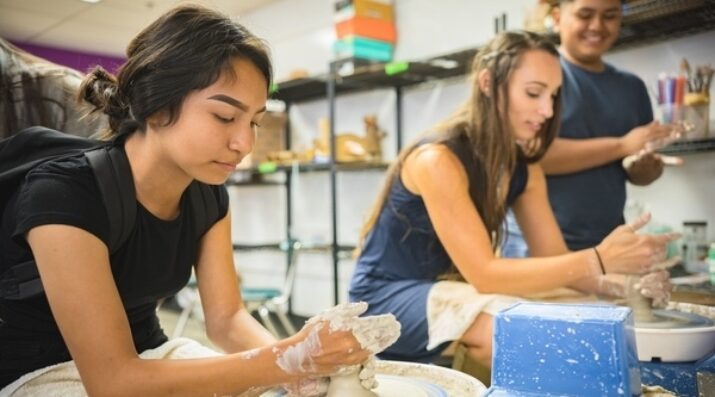
Photo at top of Vista Unified School District students, courtesy of NGLC.
Kelly Murphy
Art Educator
Kelly Murphy is a passionate art educator with over 15 years of experience in Catholic schools. Named “Teacher of the Year at School of the Incarnation for 2024–25” and recognized as a “Top Teacher” by What’s Up? West County & Beyond Magazine in 2017, she is known for using art not only as a creative outlet but also as a tool for supporting student mental wellness. Kelly has led professional development across the Archdiocese of Baltimore on topics ranging from Catholic art and art therapy to classroom management. Her mission is to create classroom spaces that are healing, supportive, and inspiring.