Take Time to Make Time: Creative Mindfulness in your Classroom

Kelly Murphy
Art Educator
in Maryland
Topics
We’ve all had the experience of truly purposeful, authentic learning and know how valuable it is. Educators are taking the best of what we know about learning, student support, effective instruction, and interpersonal skill-building to completely reimagine schools so that students experience that kind of purposeful learning all day, every day.
Art therapy and active mindfulness are wellness strategies any teacher can use to help students address anxiety and stress, resetting the energy in their classroom.
As educators, we know the pressure of time all too well. Every day feels like a balancing act, covering the curriculum, managing behaviors, preparing students for assessments, and finding time for all the “extras.” So when I talk about incorporating art therapy practices and active meditation into the school day, one of the first responses I hear is: “But where will I find the time?”
And honestly, I get it. Time is the biggest barrier.
But here’s the thing; these practices don’t need to take over your day. Even two minutes before class begins or two minutes after a big transition can make a difference. Start small. A short breathing activity, a mindful pause, a sketching exercise. You don’t have to carve out a huge block of time, and you don’t need special materials. Just a willingness to try, and a belief that it matters.
Why Art Therapy and Active Meditation Matter
The truth is, our students are carrying so much into the classroom. Anxiety, stress, uncertainty, things we often can’t see but that show up in how they learn, behave, and interact. When we ignore those feelings, they build up. That’s when you see outbursts, shutdowns, or students who simply disengage.
I’ve seen firsthand how simple mindfulness strategies and creative exercises can shift the energy in a classroom. Breathing techniques, for example, have been a big part of my classroom management approach. They don’t work for every student, but they do help some. Sometimes, that’s all it takes to change the whole tone of the class.
And as much as these practices benefit our students, they benefit us as teachers too. Taking a moment to slow down, to notice our own stress, can help us reset right alongside our students.
Building Buy-In for Mindfulness
Of course, one teacher alone can’t make systemic change. That’s why administrative support and school-wide communication are so essential. Mindfulness and art-based strategies shouldn’t be left only to the art or music teacher (though I’ll proudly carry that torch when I can!). Every teacher, in every subject, can find small ways to weave in these practices.
Imagine the impact if students were exposed to mindfulness across subjects and grade levels, if it became a shared norm, not just an “extra.”
A Simple Breathing Practice
To give you an idea of just how easy this can be, here’s a quick breathing activity I use with my students:
- Find a comfortable position, whether it’s sitting, standing, or even walking.
- Take a deep breath in for a count of four.
- Breathe out for a count of four. Repeat three times.
- On the last breath, raise your shoulders to your ears as you inhale, hold, then drop them down as you exhale.
That’s it. Three breaths. Less than a minute. Notice how you feel afterward compared to when you started. Imagine what it could do for your students before a test, after recess, or when they’re carrying stress from home.
Some Mindfulness Resources to Explore
If you’re curious to explore more, here are a few places to start:
- Zentangle
- The Calm App – This app includes resources and blog posts that connect art and mindfulness.
- YouTube – Search “progressive muscle relaxation” or “active meditation” and try out what resonates with you.
And remember, just like with our students, not every tool will work for you. Try different approaches and stick with the ones that feel supportive.
Looking Ahead with Hope
I’m an optimist, and I truly believe we’re heading in the right direction. The need for mental wellness supports in schools is undeniable, and creativity and mindfulness have to be part of the solution. My hope is that one day, just like CPR training, every teacher will be equipped with mental wellness strategies as a standard part of their practice.
Because the truth is, we’re not just teaching subjects; we’re teaching whole humans, and our classrooms can be spaces for healing just as much as they are for learning.
Listen
NGLC is grateful for our collaboration and partnership with EDU Café Podcast that brings fresh voices and insights to the blog. Listen to the full episode of the podcast that inspired this article.
More from the Author
How Art and Active Meditation Support Classroom Mindfulness - Active meditation with art can help a whole classroom of students (and their teacher!) focus, immerse in their work, and build resilience and balance in a world that rarely slows down.
Building a Mental Wellness Tool Belt for Students and Educators - Meditation calms the body’s stress response; over time, students learn how to notice their thoughts, regulate their emotions, and refocus their attention.
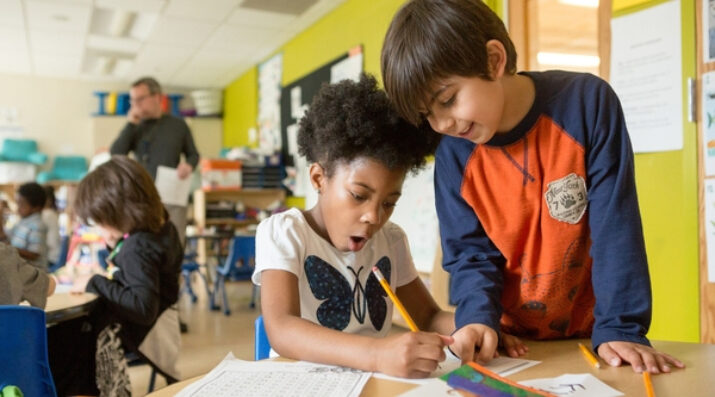
Photo at top by Allison Shelley/The Verbatim Agency for EDUimages, CC BY-NC 4.0.
Kelly Murphy
Art Educator
Kelly Murphy is a passionate art educator with over 15 years of experience in Catholic schools. Named “Teacher of the Year at School of the Incarnation for 2024–25” and recognized as a “Top Teacher” by What’s Up? West County & Beyond Magazine in 2017, she is known for using art not only as a creative outlet but also as a tool for supporting student mental wellness. Kelly has led professional development across the Archdiocese of Baltimore on topics ranging from Catholic art and art therapy to classroom management. Her mission is to create classroom spaces that are healing, supportive, and inspiring.