Diverse Learning Environments Can Promote More Differentiated Instruction

Paul Klee FAIA, ALEP, LEED AP
Principal
FGM Architects
Topics
We’ve all had the experience of truly purposeful, authentic learning and know how valuable it is. Educators are taking the best of what we know about learning, student support, effective instruction, and interpersonal skill-building to completely reimagine schools so that students experience that kind of purposeful learning all day, every day.
Variety in learning spaces helps schools evolve as learning evolves and accommodates a variety of learning approaches to meet students’ needs.
Innovations in teaching and learning have had little impact on modern space planning and school architecture. We know that students and teachers do better when they have variety, flexibility, and comfort in their environment. This series examines how next generation learning spaces impact the learning experience for students and their teachers. If you have the opportunity to design a new school building or renovate an existing building, or if you are interested in using space better in your school, this series can help ensure that the physical spaces in your building promote the skills students need to thrive and contribute to an ever-changing global society.
Differentiated learning in schools is an approach to teaching that involves tailoring instruction to meet the diverse needs, interests, and abilities of students. The goal is to provide every student with access to meaningful learning experiences that match their unique learning needs and paces, ensuring that all students have the best chance to succeed. This method recognizes that learners are diverse in terms of their readiness levels, interests, and learning profiles.
By using various strategies such as flexible grouping, tiered assignments, and personalized content, teachers can create more inclusive and engaging learning environments. While it requires thoughtful planning and ongoing assessment, the benefits—improved student engagement, academic achievement, and personal growth—make differentiated learning an essential practice in modern education.
Responsive school design evolves with the way students learn. As evidence-based research informs design, today’s best schools address the diversity of learning styles through diverse environments, offering choices and supporting activities across spectrums from individual to group; active to passive; formal to informal; and from indoors into the landscape. Think about the variety of spaces available in your school to accommodate different learning modalities.
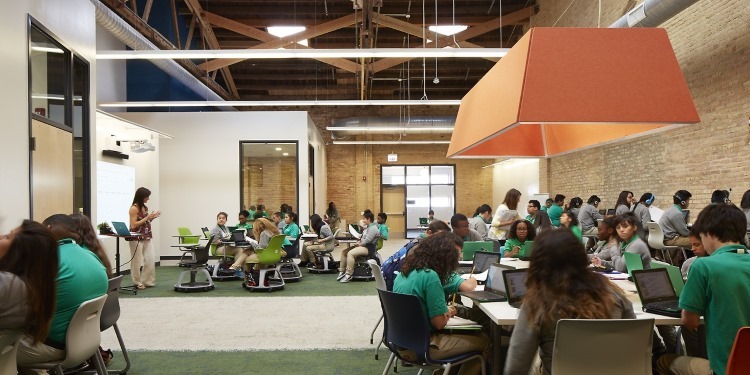
Differentiated learning opportunities abound in the Learning Pod classroom spaces at Intrinsic Schools in Chicago. Photo courtesy of NGLC.
Key Principles of Differentiated Learning
Content: The material being taught can be adapted based on students' readiness levels and interests. For instance, students might read different texts on the same topic, or some may engage in deeper analysis of a concept while others review foundational knowledge.
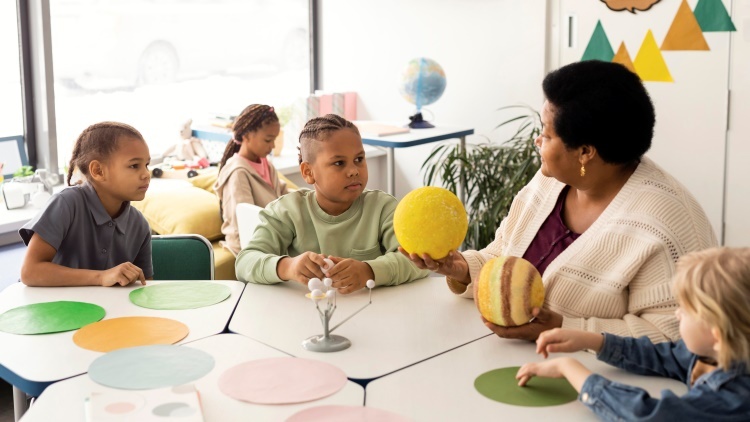
Process: The way students engage with the content can vary. Some may work individually, others in groups, and some may use interactive or hands-on activities while others may focus on independent learning. This allows for flexibility in how the learning is delivered.
Product: Students may demonstrate their learning in different ways, such as through essays, projects, presentations, or creative works. The method of assessment might differ based on students' strengths and interests, ensuring that every student can showcase their learning in a format that suits them.
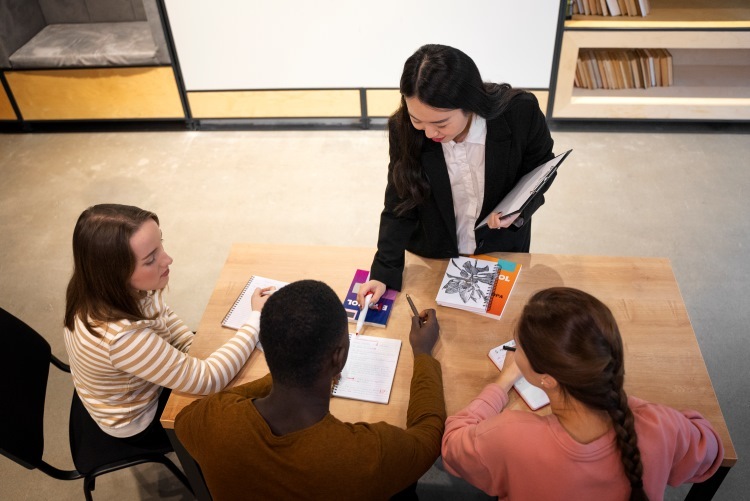
Learning Environment: The physical or virtual classroom setting is flexible to meet the needs of different learners. Some students may need quiet spaces for focused work, while others may thrive in a more collaborative, open environment.
Credit: freepik
Strategies for Implementing Differentiated Learning
Flexible Grouping
Students are grouped and regrouped based on specific learning objectives, readiness levels, or interests. Grouping can be dynamic, changing depending on the task or topic, and helps ensure that students have opportunities to collaborate with different peers.
Examples:
A teacher may form a group for a hands-on activity and another for independent research.
During reading lessons, students could be grouped by reading level and assigned texts accordingly.
Tiered Assignments
Tasks are designed at varying levels of difficulty to match the readiness and skill level of different students. All students work on the same essential concept, but the level of challenge differs.
Example: In a math class, students may work on similar problems, but some might solve basic equations while others tackle more complex word problems on the same topic.
Varied Content Delivery
Teachers provide content in multiple formats to accommodate different learning styles (e.g., auditory, visual, kinesthetic). This could include videos, readings, infographics, or interactive lessons.
Example: A history teacher might provide a combination of written materials, video documentaries, and hands-on artifacts for students to engage with a historical event.
Interest-Based Learning
Students can explore topics or themes that interest them, which helps to increase motivation and engagement. Teachers may offer choice boards, where students can choose the direction of their learning within a specific topic.
Example: In a science class, while learning about ecosystems, some students might focus on marine life, others on rainforests, while others may investigate deserts.
Learning Contracts
A learning contract is an agreement between the teacher and student outlining specific tasks, goals, and deadlines. It gives students some degree of autonomy and accountability for their learning.
Example: A student may negotiate a learning contract with the teacher, setting a goal to complete a project on a specific topic and decide on how they will demonstrate their learning (report, model, video, etc.).
Use of Technology
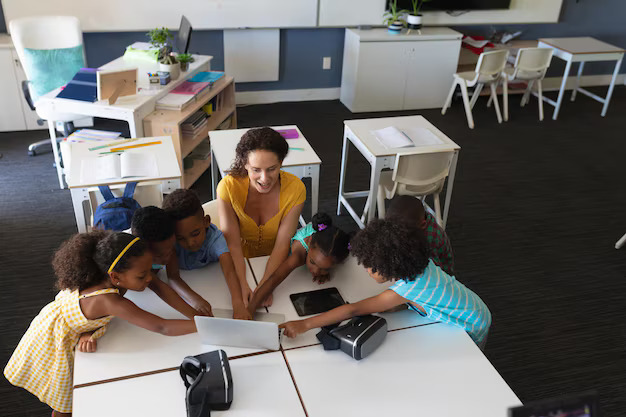
Technology offers a wide range of tools to support differentiated instruction. Online learning platforms, educational apps, and tools like digital portfolios can help cater to various learning preferences and provide personalized learning experiences.
Example: Using adaptive learning software that adjusts the difficulty of tasks based on students' progress, or offering resources like Khan Academy for students who need extra help outside of class.
Pre-Assessment and Ongoing Assessment
Teachers can use pre-assessments to gauge students' prior knowledge and readiness before beginning a new lesson or unit. This helps in forming the groups or assigning tasks at the appropriate level. Ongoing formative assessments allow teachers to track progress and adjust instruction as needed.
Example: Administering a short quiz at the start of a unit to see what students already know, and then planning differentiated instruction accordingly.
Adjusting Pacing
Some students may need more time to grasp a concept, while others might move ahead more quickly. Teachers can adjust the pace of instruction to ensure that all students are appropriately challenged.
Example: Offering enrichment activities or accelerated content for advanced learners while providing additional support or alternative learning paths for students who need more time to master the material.

Credit: freepik
Benefits of Differentiated Learning
Promotes Equity: Differentiated learning provides all students, regardless of their skill levels or learning styles, with the opportunity to succeed by ensuring that lessons and assessments meet their individual needs.
Increases Student Engagement: By offering students choices in how they learn and allowing them to explore topics of personal interest, differentiation helps foster a sense of ownership over their learning, which leads to greater motivation and engagement.
Improves Learning Outcomes: When students receive instruction that meets their specific needs, they are more likely to understand and retain the material. Differentiation helps students master core concepts at their own pace, leading to improved academic performance.
Fosters a Growth Mindset: Differentiated learning encourages students to embrace challenges and see mistakes as opportunities to learn. It creates a supportive environment where all students feel valued and capable of achieving their goals.
Supports Diverse Learners: Whether students have learning disabilities, language barriers, or advanced skills, differentiated learning ensures that each student is provided with the appropriate tools and strategies to succeed.
Credit: Wavebreak Media on freepik
Challenges of Differentiated Learning
Time and Resource Intensive: Differentiation can require a significant amount of planning, preparation, and classroom management, as teachers must create various materials, assessments, and activities to meet the diverse needs of their students.
Classroom Management: Managing a classroom where students are working on different tasks at their own pace can be challenging. Teachers need to balance individualized instruction with maintaining an orderly and focused environment.
Equity in Grouping: Care must be taken to ensure that all students are provided with equitable opportunities, even when they are grouped by ability or interest. Teachers must avoid inadvertently isolating certain groups of students or limiting their opportunities for growth.
Credit: freepik
Learn More
See the whole series about next gen learning spaces.
Photo at top, credit: rawpixel.com
Paul Klee FAIA, ALEP, LEED AP
Principal, FGM Architects
With over 35 years in practice, architect Paul Klee is a nationally recognized leader known for his pioneering work in designing purpose-driven K-12 learning environments that are founded in promoting transformative learning spaces in K-12 institutions to help reform the status quo of an obsolete, struggling, traditional public educational system in a rapidly evolving learning landscape. He dedicates his career to developing projects that support student-centered, next generation learning for the 21st-century, promote equity in education, and strengthen community ties. Paul’s groundbreaking framework of the Next Generation Learning Guiding Principles (NGLGP) has earned international attention for its contributions to the rationale and importance of intertwining academic and socio-emotional learning. NGLGP is a result of his innovative, structured methodology that is measurable, significant, and sustained. He was among the first to successfully focus on a rigorous statistical approach to improve learning.