Expanding Access to Work-Based Learning: Preparing Students for Success Beyond the Classroom

Katie Minihan
Executive Vice President and Chief Impact Officer
Project Lead the Way
Topics

We’ve all had the experience of truly purposeful, authentic learning and know how valuable it is. Educators are taking the best of what we know about learning, student support, effective instruction, and interpersonal skill-building to completely reimagine schools so that students experience that kind of purposeful learning all day, every day.
Work-based learning plays a critical role by introducing students as early as elementary school to a range of careers while helping them develop relevant, transferable skills.
The goal of education is to prepare students for success—but what does that look like in practice? Today, success extends beyond academic achievement. It includes equipping students with the knowledge, skills, and experiences they need to thrive in both school and the workforce.
During the edLeader Panel, Expanding Access to Work-Based Learning: Innovative Models for Career-Aligned Education, I had the opportunity to host Paul Ketcham, former superintendent of Batesville Community School Corporation (IN) and current Assistant Secretary of Education for the State of Indiana, and Michael Connet, the associate deputy executive director at the Association for Career and Technical Education (ACTE). Our conversation explored how districts can partner with their communities to expand equitable access to meaningful workplace experiences and better prepare students for the future.
A traditional education alone is no longer sufficient. Students need opportunities to apply their learning in real-world contexts and build skills that will serve them beyond graduation. Work-based learning (WBL) plays a critical role by introducing students to a range of careers—starting as early as elementary school—while helping them develop relevant, transferable skills.
Where to Look for Opportunities
Strong community partnerships are essential to expanding access to WBL. Districts can collaborate with local organizations—including hospitals, manufacturers, small businesses, and community colleges—to provide students with opportunities to explore a variety of career pathways.
These partnerships can take many forms. Employers may offer youth apprenticeships or pre-apprenticeships, allowing students to apply classroom learning in real-world settings while gaining insight into potential careers. Community colleges often provide dual-enrollment or online courses that enable students to earn college credit and build technical skills aligned to workforce needs.
Access to these opportunities, however, is not evenly distributed. Urban districts often have greater proximity to industry partners, while rural districts may face geographic limitations. Addressing this disparity requires intentional strategies. For example, rural districts can partner with organizations that offer remote or hybrid experiences, helping ensure students have access to opportunities comparable to their urban and suburban peers.
In addition to formal programs, districts can expand access through mentorship, job shadowing, career coaching, internships, guest speakers, and field trips. By building partnerships beyond their immediate communities, schools can significantly broaden the range of experiences available to students. Even within schools, student-led roles and projects can provide meaningful exposure to workplace expectations and skills.
Developing Skills
Work-based learning helps students develop the durable skills that employers consistently prioritize. These include communication, collaboration, adaptability, professionalism, and time management.
Importantly, these skills are transferable across industries and roles. As the workforce continues to evolve—including the rapid growth of fields such as artificial intelligence—students must be prepared for careers that do not yet exist. WBL supports this by helping students build both foundational knowledge and the ability to adapt to new challenges.
Evidence and practitioner experience show strong outcomes related to work based learning. The panelists shared that: students who participate in WBL often have higher rates of job placement, increased earning potential, and greater attainment of industry-recognized credentials compared to their peers.
Establishing Systems
For districts looking to get started with WBL, success depends on approaching career-connected learning as a system rather than a standalone program. This begins with a clear vision and shared goals for what college and career readiness should look like for all students.
Engaging community partners early in the process is critical. Employers can offer valuable insight into the skills and competencies they seek, allowing districts to better align instruction and experiences with workforce needs.
Establishing structures such as advisory councils or cross-sector partnerships can help sustain this alignment over time. These groups provide ongoing feedback, strengthen accountability, and ensure that programs remain responsive to both student and industry needs.
A growing number of resources are available to support implementation. Organizations like ACTE offer tools and guidance for developing WBL and career and technical education (CTE) programs. Additionally, many districts are willing to share their models and lessons learned. For districts, existing community relationships can serve as a strong foundation to build upon.
Effective systems also require shared ownership. Educators, administrators, and partners must align on a common definition of college and career readiness and a commitment to integrating WBL into the broader educational experience. When done well, WBL connects classroom learning to real-world application, helping students build meaningful relationships and access new opportunities—particularly those from underserved communities.
Every student deserves the opportunity to develop the skills and experiences needed for success. By expanding access to high-quality work-based learning, districts can better prepare students not only for graduation, but for life beyond the classroom.
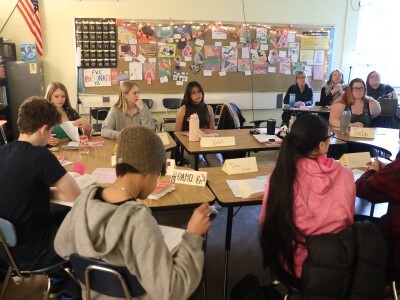
A version of this article originally appeared on edWeb on October 31, 2025. Photo at top courtesy of Project Lead the Way.
Katie Minihan
Executive Vice President and Chief Impact Officer, Project Lead the Way
Dr. Katie Minihan is a former teacher and currently the executive vice president and chief impact officer at Project Lead The Way. Follow Dr. Minihan on LinkedIn.