
From Voice to Impact: Building Student Leadership Through Learner Advisory

Matt Pitucco
Executive Director of Engagement
Distinctive Schools
in Chicago, Illinois
Topics
Next generation learning is all about everyone in the system—from students through teachers to policymakers—taking charge of their own learning, development, and work. That doesn’t happen by forcing change through mandates and compliance. It happens by creating the environment and the equity of opportunity for everyone in the system to do their best possible work.
Student voice takes on new meaning when schools create structures and provide training for learners to move from sharing feedback to leading real change.
At Distinctive Schools, our students have no shortage of ideas about how to strengthen their schools. They know where belonging is growing and where it is fraying. They notice which learning experiences invite them in, which supports feel accessible, and which routines are no longer serving their communities. Too often, however, schools ask students to share those observations without creating a meaningful path for what comes next. Listening matters, but student voice reaches its fullest power only when young people also have the opportunity, skills, relationships, and responsibility to turn their ideas into action.
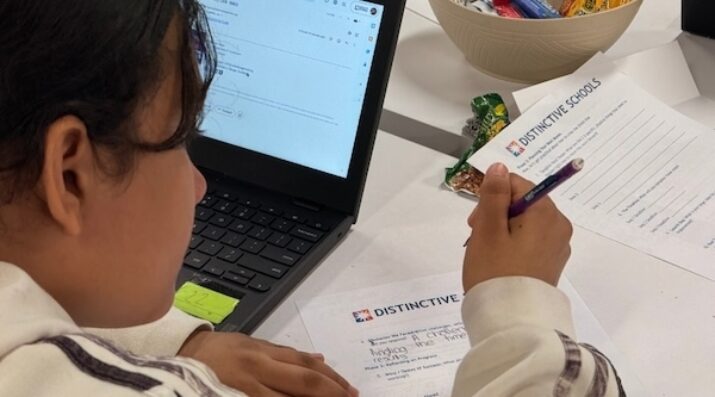
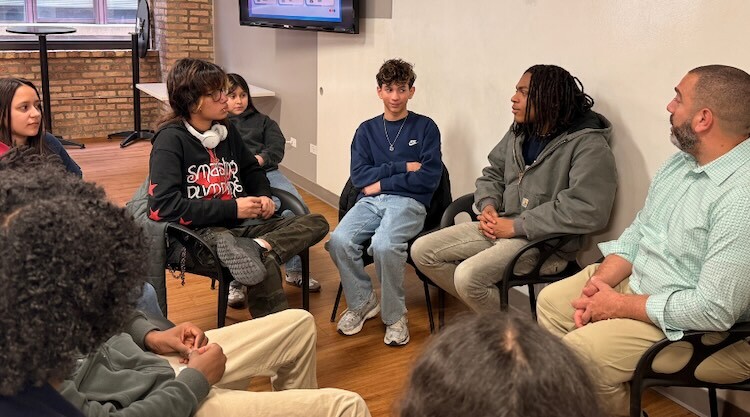
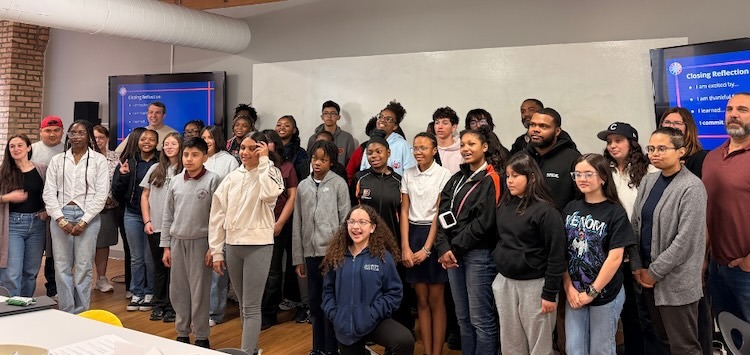
That belief sits at the heart of the Distinctive Schools Learner Advisory, which brings together middle and high school representatives from across our network of eight Chicago International Charter Schools. Over four in-person gatherings this past year, our learners built leadership skills, identified areas where change could improve the student experience, and worked alongside principals, Community School Coordinators, and other school leaders to move campus-based projects forward. The Advisory was designed not simply as a place for students to speak, but as a structure through which they could listen, investigate, collaborate, lead, and contribute to transformational change.
This work reflects a broader belief I hold about education: learning cannot be reduced to a single activity, academic subject, or setting. It should engage the whole person—intellectually, relationally, socially, emotionally, and physically—while helping each learner recognize both their own giftedness and their capacity to affect the world around them. Education is also fundamentally collaborative. If we want young people to invest in the vision of their schools, they must have authentic opportunities to help shape that vision. Learner Advisory creates one of those opportunities.
We began the year by exploring what leadership actually requires. Students considered qualities such as integrity, accountability, empathy, communication, and courage, then reflected on the capacity each person holds to become a vehicle for change. From there, they identified issues that mattered to their peers and school communities, with recurring themes emerging around social-emotional wellness and mental-health access; teaching and learning experiences; and enrichment, athletics, clubs, and student leadership. The goal was not to hand students an adult-created agenda, but rather to help them examine their own experiences, hear the experiences of others, and determine where their leadership could matter most.
Students should be able to see the line between what they say, what they learn, what they lead, and what changes.
Across subsequent gatherings, students practiced moving from concern to constructive action. They learned to define a challenge clearly, gather perspectives and evidence, identify potential partners, and frame a solution that could resonate with multiple stakeholders. They prepared and practiced presentations, received real-time feedback, and role-played conversations with school leaders. Between sessions, they returned to their campuses to engage classmates, staff members, and principals. This rhythm was essential: network gatherings offered shared learning and cross-school community, while campus conversations made the work real. Student voice was not contained within four meetings; it traveled back into each school.
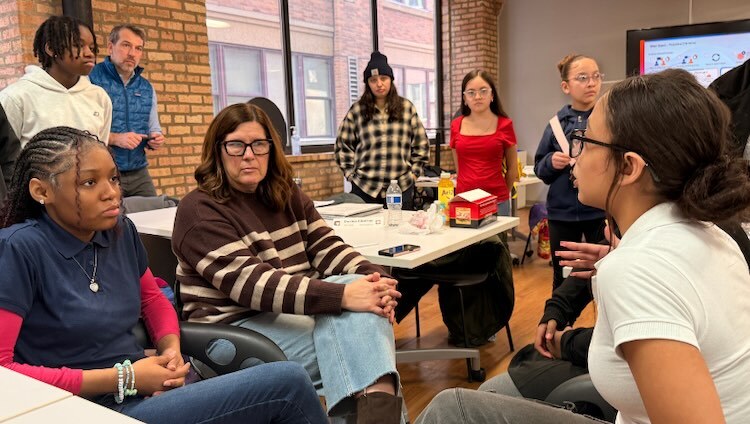
At CICS Bucktown, students focused on dissatisfaction with school meals and the amount of food being wasted. Rather than stopping at a familiar complaint, they tracked menu items, surveyed peers, documented what students were and were not eating, and brought photographs and specific evidence to their principal and kitchen staff. They reframed the issue as both a student-experience concern and a financial-waste concern, creating common ground for collaboration. With adult partners establishing necessary guardrails while preserving student ownership, unpopular meals were removed, alternatives were tested, and student-informed options were added to the menu. The change mattered, but so did the process: learners saw that thoughtful advocacy could produce a concrete result.
That same movement from voice to leadership took different forms in other campus communities. CICS Longwood Elementary learners examined how classroom experiences could become more engaging and responsive to students. At CICS Longwood High School, learners advanced ideas connected to a peace room and stronger spaces for wellness and belonging. Other school teams explored priorities connected to enrichment, mental-health access, student leadership, and the daily experiences that shape whether learners feel known and invested in their school. The projects were intentionally campus-specific. Our network-wide structure helps students develop shared leadership tools and then apply them to the people, needs, and possibilities closest to them as opposed to flattening the distinct identity of each community.
The culminating gathering of the Learner Advisory made that growth visible. Students presented their work, named the challenges they encountered, reflected honestly on progress, and articulated how their projects could be sustained. Just as importantly, they listened across schools. They offered affirmations, asked thoughtful questions, and gave one another constructive feedback. In those moments, the Advisory became more than a collection of campus projects. Instead, it became a community of young leaders who understood that leadership is not simply having the loudest voice or the strongest first idea. It is the ability to listen, build trust, refine thinking, work through constraints, and remain committed to a purpose larger than oneself.
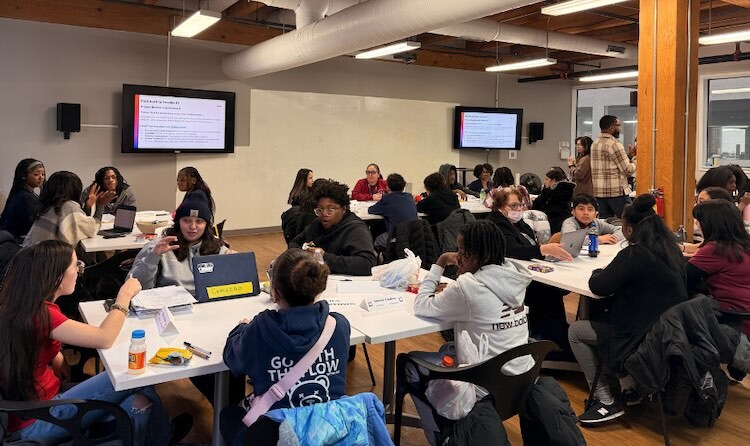
Adults are indispensable to this process, but our role must be intentional. Principals and school leaders create the conditions for student ideas to be heard and acted upon. Community School Coordinators build relationships, maintain momentum, help learners navigate systems, and connect projects to resources and partners. Network leaders provide structure, learning experiences, and opportunities for students to see beyond their own campuses. None of this means doing the work for students. It means working alongside them, offering access, guidance, honest feedback, and meaningful decision-making space while engaging learners in genuine collaboration and partnership.
Schools do not need to launch a network-wide advisory to begin. They can explicitly name the leadership skills embedded in everyday learning, establish student representatives who gather peer perspectives, build consistent forums for students and school leaders to meet, and create feedback loops that show students what happened after their input was shared. The most important shift is from episodic listening to sustained partnership. Students should be able to see the line between what they say, what they learn, what they lead, and what changes.
This year reinforced something our learners already knew: schools become stronger when students are treated as contributors to its design and stewards of their communities. When we move from designing schools for students to designing schools with them, we build environments that are more authentic, responsive, creative, and connected. We also fulfill a deeper purpose of education: helping young people recognize their own capacity to understand the world, act within it, and transform it alongside others.
All photos courtesy of Distinctive Schools.
Matt Pitucco
Executive Director of Engagement, Distinctive Schools
Matt Pitucco has served in education for over 20 years. In his experiences with Distinctive Schools, he has served as a dean of students and supported students and families though the processes of exploring, applying, and transitioning to high school. In his current role as the executive director of engagement, Matt leads strategic organization around student recruitment, enrollment, attendance, and family engagement. This includes a deep focus on understanding chronic absence and supporting families to address barriers and elevate attendance at school.