Today’s Schools Need Research and Information Gathering Spaces

Paul Klee FAIA, ALEP, LEED AP
Principal
FGM Architects
Topics
We’ve all had the experience of truly purposeful, authentic learning and know how valuable it is. Educators are taking the best of what we know about learning, student support, effective instruction, and interpersonal skill-building to completely reimagine schools so that students experience that kind of purposeful learning all day, every day.
Innovative learning environments provide spaces that encourage students and teachers to engage in investigative conversations, conduct peer reviews, develop research skills, and present their learning publicly.
Innovations in teaching and learning have had little impact on modern space planning and school architecture. We know that students and teachers do better when they have variety, flexibility, and comfort in their environment. This series examines how next generation learning spaces impact the learning experience for students and their teachers. If you have the opportunity to design a new school building or renovate an existing building, or if you are interested in using space better in your school, this series can help ensure that the physical spaces in your building promote the skills students need to thrive and contribute to an ever-changing global society.
Research and information gathering are foundational skills in education, teaching students how to think critically, analyze data, and communicate their findings. Both teachers and students need to know how to find, evaluate, and synthesize information to ensure that learning is not just about memorization, but also about applying knowledge in meaningful ways. By developing research skills, schools prepare students to become independent learners, capable of navigating the vast amount of information available in the world. This is essential not only for academic success but also for developing lifelong skills of inquiry, problem-solving, and informed decision-making.
Spaces in innovative learning environments should encourage students and teachers to engage in investigative conversations, peer reviews, personal contemplation, and much more. They should actively invite in outside industry/business partners and experts to mentor students and provide real-world feedback on projects founded in authentic, factually-based learning criteria. Small group rooms can be used for targeted instruction or facilitated learning encounters. These spaces combine the students’ strengths for individual and group work to allow them to fully understand the interdisciplinary relationship between learning objectives and how to learn. Small group spaces encourage collaborative, breakout teams.
Here’s how research and information gathering can be implemented in schools.
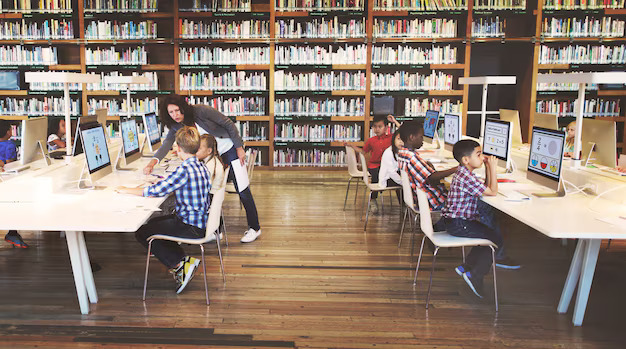
Credit: rawpixel.com on freepik
Teaching Research Skills
Modeling Research Techniques: Teachers can demonstrate effective research methods by showing students how to ask the right questions, find credible sources, and organize their findings. This could be done through direct instruction or guided practice.
Breaking Down the Research Process: Research can be taught as a step-by-step process, such as:
Identifying a Topic: How to select and narrow down a research question or topic.
Finding Sources: Introduction to library databases, online resources, and textbooks. Teaching students how to use search engines efficiently and how to evaluate sources for credibility.
Organizing Information: Teaching methods for organizing research (e.g., using graphic organizers, outlines, or mind maps).
Synthesizing and Presenting: Guiding students in synthesizing information, comparing and contrasting sources, and presenting findings clearly and logically through essays, presentations, or projects.

Credit: DC Studio on freepik
Utilizing Different Information Sources
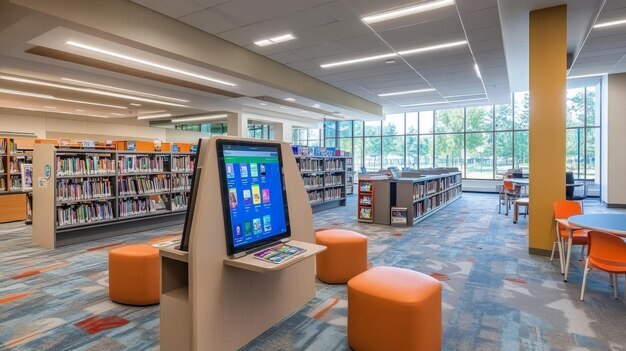
Books and Textbooks: Books are often the most reliable sources for in-depth information. Encouraging students to use school libraries, public libraries, and digital libraries helps them gain access to a wide variety of information.
Academic Journals and Articles: Exposing students to academic journals, research papers, and scholarly articles can provide them with high-quality, reliable information. Teachers can guide students on how to access these materials through databases like JSTOR and Google Scholar or through school subscriptions.
Websites and Databases: Teaching students how to find trustworthy websites (such as government sites, educational institutions, and reputable organizations) and how to discern credible online content from misinformation is vital.
Interviews and Surveys: For primary research, students can be taught how to design and conduct surveys or interviews with experts or peers. This can be especially useful for projects that require firsthand data or primary sources.
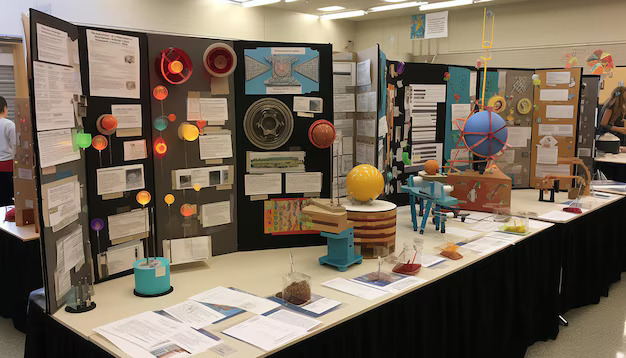
AI-generated image. Credit: thetrimhub on freepik.
Teaching Critical Thinking and Source Evaluation
Evaluating Credibility: Students must be taught how to evaluate the credibility of sources. This includes understanding the difference between peer-reviewed articles, opinion-based pieces, and sources that might be biased or unreliable.
Fact-Checking: Introduce students to fact-checking tools (like Snopes, FactCheck.org, etc.) and emphasize the importance of verifying the accuracy of information before using it.
Recognizing Bias and Perspective: Encourage students to understand the point of view behind each source and how that might influence the way information is presented. Teaching them to consider the author's background, purpose, and audience is important for developing critical thinking skills.
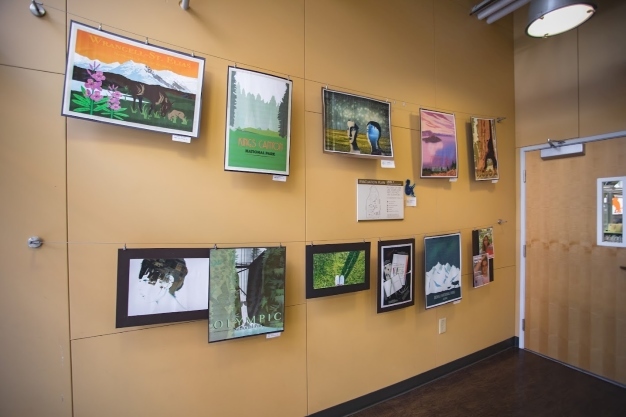
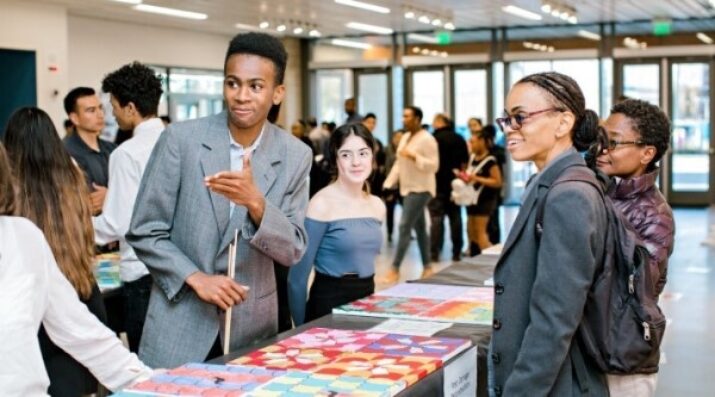
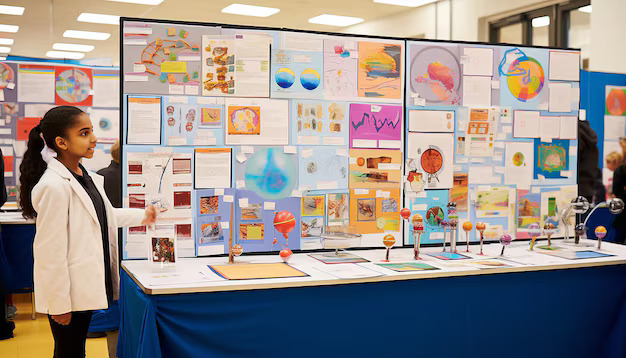
Student artwork on display at e3 Civic High in San Diego, California. Credit: NGLC
Collaboration and Group Research
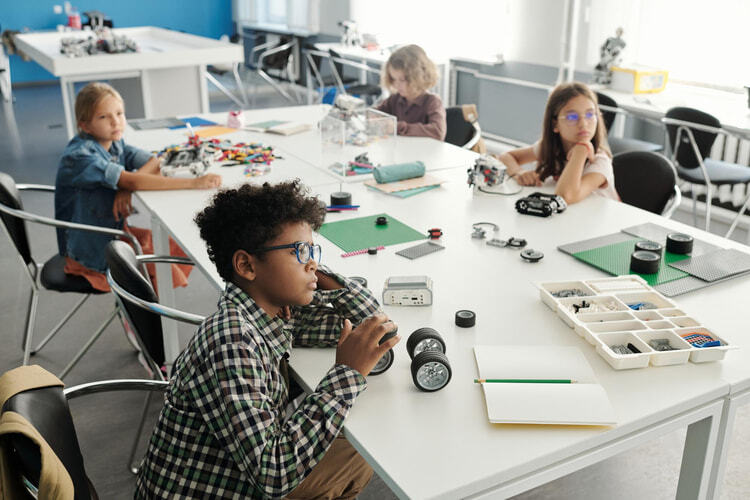
Group Projects: Researching in small groups helps students divide tasks, collaborate, and learn from each other. Teachers can facilitate group discussions and peer feedback sessions where students present their findings and learn to assess each other’s research quality.
Collaborative Tools: Using collaborative tools like Google Docs, Padlet, or Microsoft Teams can allow students to collect, share, and organize research together in real-time.
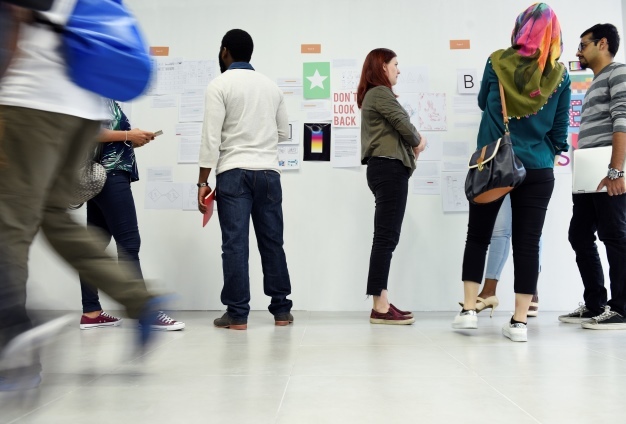
Credit: rawpixel.com on freepik
Incorporating Technology in Research
Online Databases and Research Platforms: Many schools provide access to specialized databases for students to conduct research, including databases like EBSCO, ProQuest, or Britannica School. These resources provide access to peer-reviewed articles, encyclopedias, and other academic resources.
Digital Research Tools: Students can use tools like Zotero or Mendeley to collect and organize their research sources. These tools help with citation management and allow students to store articles, notes, and references in one place.
Web-Based Research Projects: Students can create multimedia projects using websites, videos, and interactive tools that demonstrate their research. Platforms like Prezi or Canva can allow students to creatively present their research findings.
AI-generated image. Credit: ebosbond on freepik
Effective Note-Taking and Organizing Information
Outlines and Concept Maps: Teaching students how to create outlines or use concept maps and graphic organizers can help them break down complex information into manageable parts.
Digital Tools for Note-Taking: Using tools like Evernote, OneNote, or Google Keep can help students organize notes, bookmark important websites, and keep track of research progress.
Summarizing Information: Encouraging students to summarize key points from their research in their own words helps them internalize the information and improve comprehension.
AI-generated image. Credit: thetrimhub on freepik
Writing and Presenting Research
Research Papers and Essays: Writing a research paper involves gathering information, analyzing sources, synthesizing ideas, and presenting findings logically. Students need to learn how to structure papers and cite sources properly (e.g., APA, MLA, Chicago styles).
Presentations: In addition to written reports, students can present their research findings through multimedia presentations, speeches, or posters. This helps them practice public speaking skills and learn how to present data and findings effectively.
Creating Infographics: Infographics are a great way for students to visualize data and present information in an engaging, concise format. Tools like Piktochart or Canva can help students design infographics as part of their research projects.
Credit: pressmaster on Freepik
Fostering Independent Research and Inquiry-Based Learning
Independent Research Projects: Encouraging students to choose their own research topics based on their interests can spark curiosity and intrinsic motivation. Teachers can guide students through the process, helping them narrow down topics and develop research questions.
Inquiry-Based Learning: This approach encourages students to ask questions, gather information, and seek answers through independent research. The teacher acts as a facilitator rather than a direct instructor, helping students learn how to find information and solve problems on their own.
AI-generated image. Credit: we3yanie on freepik
Assessment of Research Skills
Formative Assessments: Teachers can use regular check-ins, research logs, or drafts to assess students’ progress throughout the research process.
Rubrics for Research Projects: Clear rubrics can outline expectations for research projects, such as how well students gathered credible sources, synthesized information, and presented their findings.
Peer Reviews: Having students review each other’s work can help them develop critical thinking skills and provide valuable feedback to improve their research and presentation skills.
Learn More
See the whole series about next gen learning spaces.
Photo at top courtesy of Da Vinci Schools
Paul Klee FAIA, ALEP, LEED AP
Principal, FGM Architects
With over 35 years in practice, architect Paul Klee is a nationally recognized leader known for his pioneering work in designing purpose-driven K-12 learning environments that are founded in promoting transformative learning spaces in K-12 institutions to help reform the status quo of an obsolete, struggling, traditional public educational system in a rapidly evolving learning landscape. He dedicates his career to developing projects that support student-centered, next generation learning for the 21st-century, promote equity in education, and strengthen community ties. Paul’s groundbreaking framework of the Next Generation Learning Guiding Principles (NGLGP) has earned international attention for its contributions to the rationale and importance of intertwining academic and socio-emotional learning. NGLGP is a result of his innovative, structured methodology that is measurable, significant, and sustained. He was among the first to successfully focus on a rigorous statistical approach to improve learning.