Students as AI Natives: Rethinking Learning for the Next Generation

Ryan Gravette
Director of Information and Technology
Idaho Digital Learning Alliance
in Nampa, Idaho
Topics
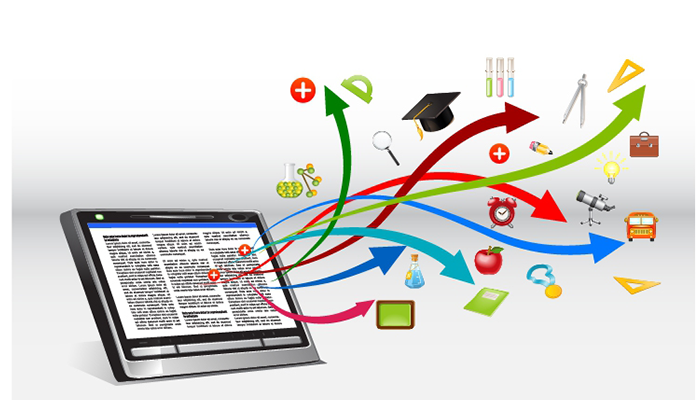
Educators increasingly rely on education technology tools as they shift instruction, redefine teacher roles, and design learning experiences that reflect how students actually learn. Technology should never lead the design of learning. But when used intentionally, it can personalize instruction, enrich learning environments, and help students master critical skills.
AI that replaces learning undermines the very purpose of education. But when AI informs and augments learning, it enables deeper engagement and more analysis, critical thinking, and creativity.
Walk into any classroom today, and you’ll find students who are “AI natives.” For them, AI tools aren’t futuristic; they’re part of daily life. Just as Millennials grew up as “digital natives” with the internet, today’s learners are growing up with AI as a constant companion.
This shift has enormous implications for education. While adults may still be experimenting with AI, students often leap straight into using it. And too often, their instinct is to use AI for replacement, where it does the work for them, rather than for informing or augmenting their learning. (Learn more about these three uses of AI in my last article, The Future of Work in the Age of AI: Inform, Augment, Replace)
How Students Engage with AI
I’ve seen students use AI to generate essays, solve math problems, or design presentations in minutes. On one level, it’s remarkable. Tools that once took hours are now accessible instantly. But it raises troubling questions. If a student asks AI to write their paper, are they really learning?
The temptation to replace is strong. AI delivers answers faster than any textbook or teacher. But without intentional guidance, this shortcut risks undermining the very purpose of education: developing human intelligence, critical thinking, problem-solving, and creativity.
AI as Informer and Augmenter in Learning
When used well, AI can inform and augment student learning in powerful ways. Imagine a student working on a history project who uses AI to gather and summarize primary sources. Instead of spending hours collecting basic information, they can spend more time analyzing and synthesizing. Or a student writing an essay who uses AI to brainstorm ideas, then develops and revises their own draft.
In these scenarios, AI doesn’t replace thinking; it enables deeper engagement. The key is teaching students how to use AI as a partner, not a crutch.
AI as a Tutor
One of AI’s most promising roles is as a tutor. Unlike a traditional classroom, where a teacher balances 30 students at once, AI can provide personalized feedback, ask guiding questions, and adapt to a learner’s pace.
Tools already exist that act as “Socratic tutors,” prompting students with hints rather than handing over answers. This can reinforce learning rather than diminish it. But the design matters; like Goldilocks, it needs to be “Just right.” If the AI simply provides solutions, it undermines growth and developing persistence through struggle. If it asks endless questions, students may abandon the AI and seek a more efficient way to solve their challenge. The proper amount is nuanced. If it asks the right questions and creates the right level of thinking by students, it can spark curiosity and persistence while still being an efficient solution for the learner.
Rethinking Assessment and Pedagogy
AI forces us to reconsider how we design assignments and assessments. If a tool can generate a five-paragraph essay in seconds, perhaps the essay is no longer the best measure of learning. Instead, educators may need to design tasks that require personal reflection, in-class application, or collaborative problem-solving, which are things that AI can augment but can’t authentically replicate.
This doesn’t mean lowering standards. It means raising the bar to focus on skills that matter most in an AI-driven world: analysis, creativity, ethical reasoning, and human expression.
Opportunities Ahead
When thoughtfully integrated, AI can open new opportunities for students:
Access: Students in underserved communities can gain exposure to resources, experiences, and mentorship that were once inaccessible.
Personalization: Learning can be adapted to individual needs, providing scaffolding for some and acceleration for others.
Exploration: Students can use AI to simulate experiences, such as interviewing historical figures, modeling scientific experiments, or exploring career pathways.
These possibilities don’t diminish the role of teachers; rather, they amplify it. Educators become guides who help students navigate AI thoughtfully, ensuring it expands rather than contracts their learning.
The Educator’s Challenge
For educators, the challenge is twofold: resist the temptation to ban AI outright, and avoid the trap of letting students use it uncritically. Students need guidance to develop healthy habits around AI, just as they once needed guidance with calculators or the internet.
Teachers can model responsible use: transparently showing how they use AI to brainstorm but not to finish, or how they cross-check AI’s outputs for accuracy. This modeling is as valuable as any lesson plan. The next generation won’t just use AI; they’ll shape it. Our responsibility is to ensure they do so with wisdom, integrity, and a sense of curiosity.
Listen
🎧 For more reflections, listen to my EDU Café conversation!
More from the Author
The Future of Work in the Age of AI: Inform, Augment, Replace - AI’s role in reshaping the way we work can be characterized by three stages—inform, augment, and replace—impacting the student success skills that matter most.
AI in the Classroom: Supporting Teachers without Replacing Humanity - Guiding principles from author Ryan Gravette help teachers use AI as a powerful ally in reducing stress, sparking creativity, and personalizing learning, without losing the essential and central teacher-student relationship.
NGLC is grateful for our collaboration and partnership with EDU Café Podcast that brings fresh voices and insights to the blog.
Image at top by All-free-download.com, CC BY-ND.
Ryan Gravette
Director of Information and Technology, Idaho Digital Learning Alliance
For 20 years, Ryan Gravette has focused on using edtech to tear down the barriers to great teaching and learning. He is the technology director for IDLA and holds an MBA, a BS in psychology, and certifications in CISSP, AWS Architect, CCNA, and Six Sigma. Follow Ryan on LinkedIn.